leave a message
If you are interested in our products and want to know more details,please leave a message here,we will reply you as soon as we can.
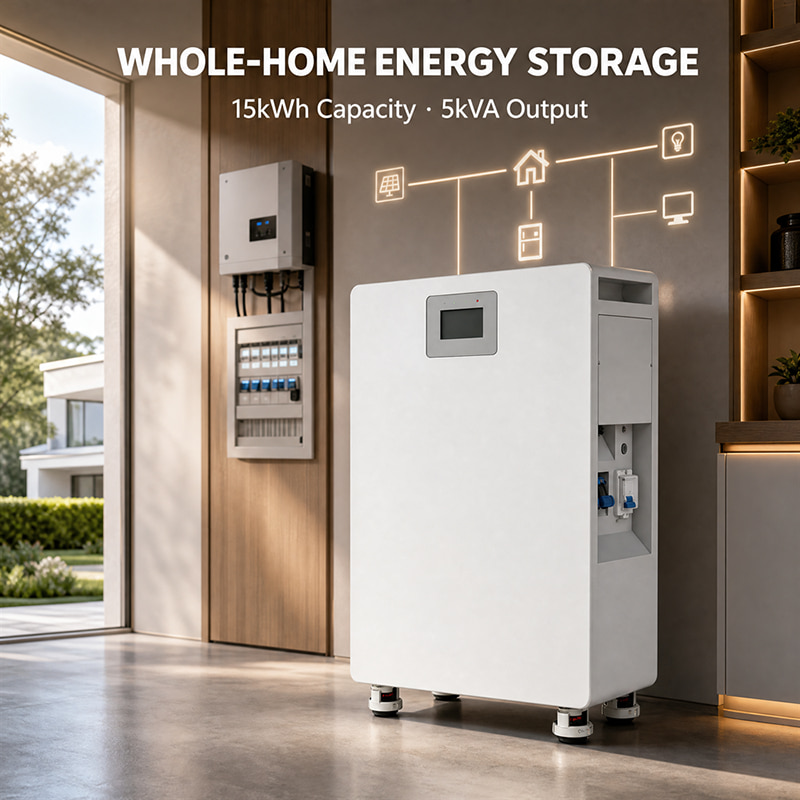
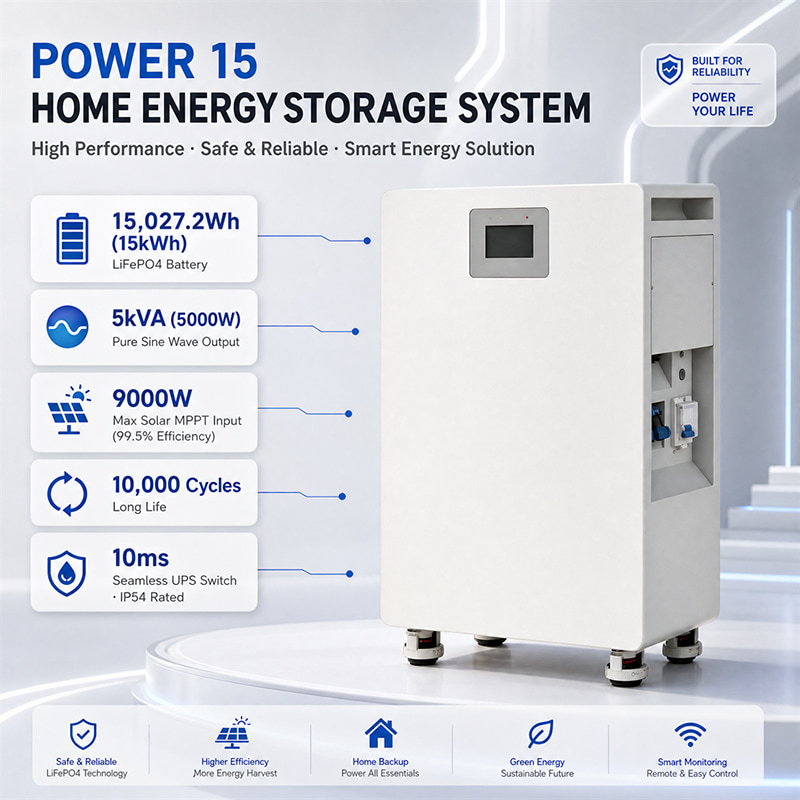
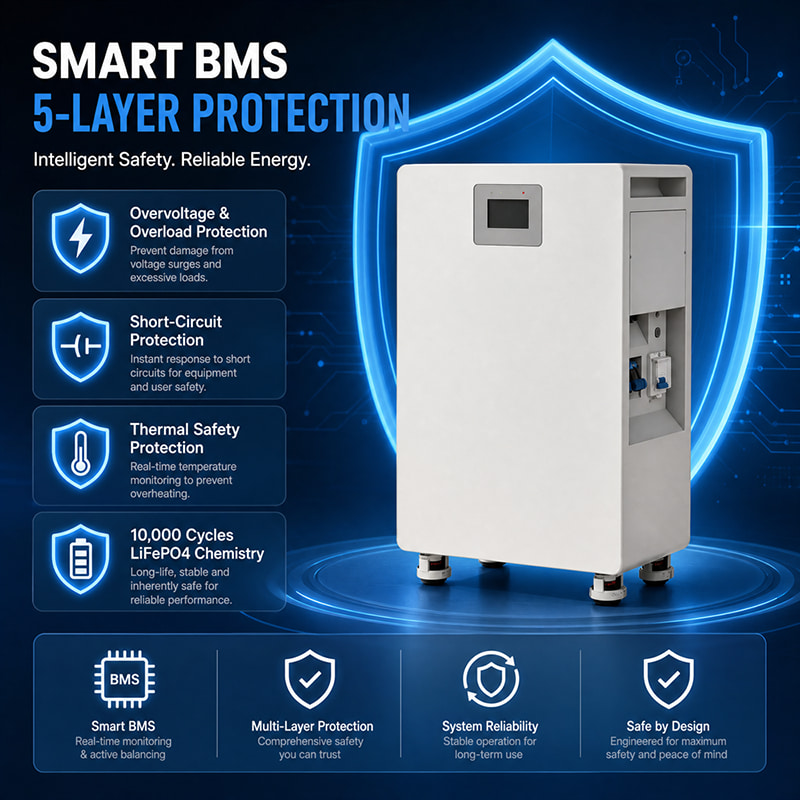
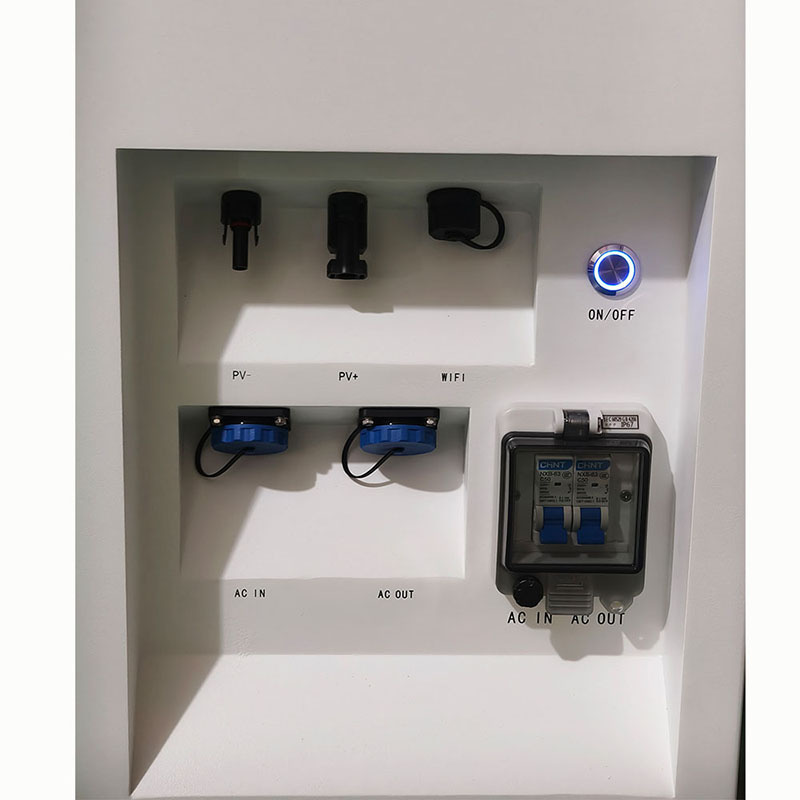
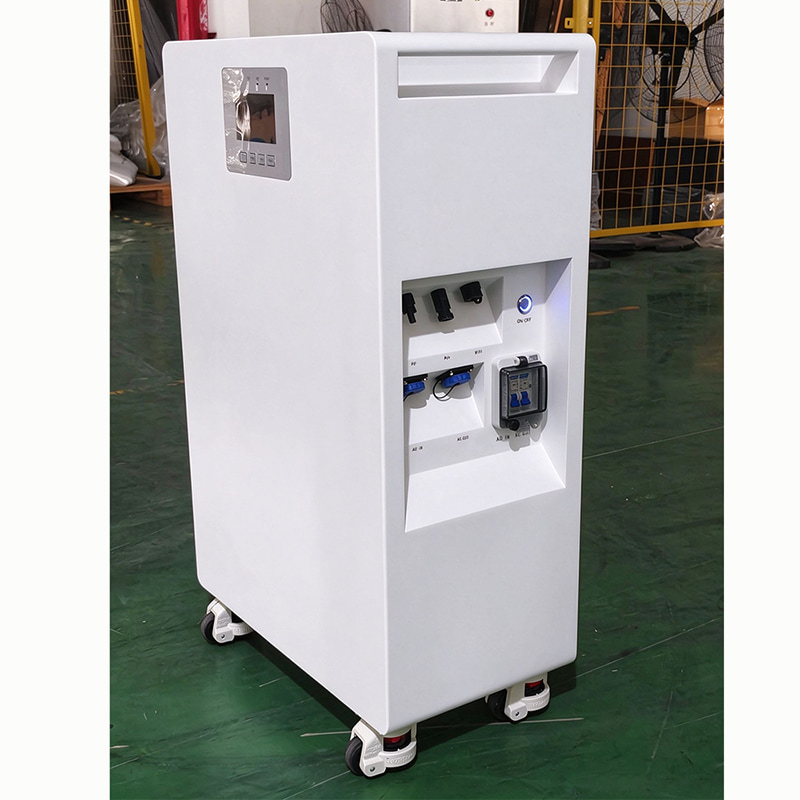
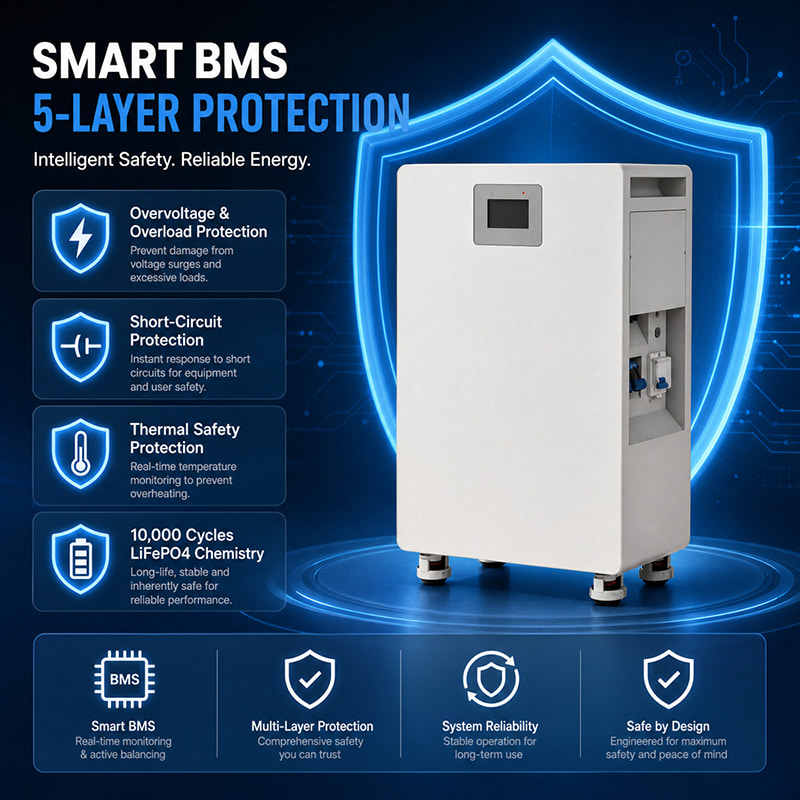
Fifteen kilowatt-hours is a quantity of energy, not a product. To turn it into power you need an inverter sized for the loads, an MPPT that can absorb the array, a transfer that is fast enough for the equipment on the circuit, and an enclosure that survives wherever it has to stand. This cabinet holds all four: 15,027Wh of LiFePO4 from eight 587Ah cells, a 5kVA pure sine inverter, a 9,000W MPPT across 60–450V, and a forced-air IP54 steel body 580mm wide on the floor.
Battery Capacity :
15027.2WhBattery Type :
8* 587AhBattery Cell Lifespan :
10000cycles@(25℃ ,100%DOD ,0.5P, @70%SOH)Protection Level :
IP54Rated AC Input Voltage :
230VACOutput Waveform :
Pure Sine WaveBody Dimensions :
L580*W330*H956 mm
Product Advantages
1. 15,027Wh from eight 587Ah cells, not a rack of small modules. One 25.6V string of eight 587Ah LFP cells rather than dozens of paralleled 100Ah units — fewer interconnects, fewer balance points, one BMS. Rated 10,000 cycles at 100% depth of discharge, 0.5P, 25°C to 70% state of health, which means daily full cycling is inside the specification rather than a stress case.
2. Three boxes become one, and the wall space comes back. Battery bank, hybrid inverter and charge controller normally arrive as three purchases, three enclosures and three sets of DC cabling. Here they share a 580 × 330 × 956 mm cabinet, which is roughly the footprint of a small fridge — relevant in a plant room, a garage corner or a utility cupboard where wall area is already spoken for.
3. 9,000W of MPPT — but the 27A input limit shapes the array. The datasheet's headline is 9kW; the number that decides your string design is 27A. At 27A you need the array operating above roughly 333V to actually reach 9kW, and the 500V open-circuit ceiling leaves room to get there. Plan strings for a high-voltage, low-current array and the full 9kW is usable; plan a low-voltage array and you will clip.
4. AC input 90–280V, so a weak grid or a generator both work. In APP/generator mode the input accepts 90–280V; in UPS mode it is a narrower 170–264V. Input power factor is ≥0.99. That range is what lets the same cabinet charge from a sagging supply, a small generator, or a normal mains connection without a separate transfer switch.
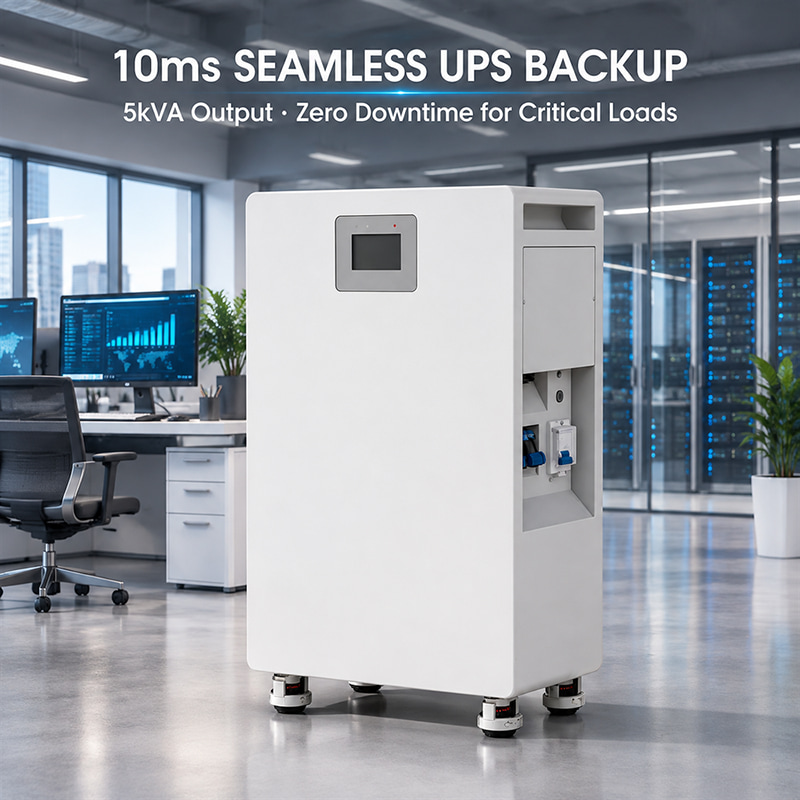
5. 10ms on UPS, 20ms on generator, and under 35W idle. The load moves to battery in 10ms in UPS mode and 20ms on generator input, which is fast enough that most equipment does not notice and slow enough that you should still not put a desktop PC on it without a UPS. On mains the unit passes power at over 99.5% efficiency and draws under 35W doing nothing.
6. IP54 forced-air steel cabinet, floor-standing. Dust-protected and resistant to water spray, cooled by forced air through the enclosure — which is what allows a garage, plant room or covered porch rather than a dry indoor corner. It is not rated for direct rain or standing water, and forced-air cooling means the intake needs clear space.
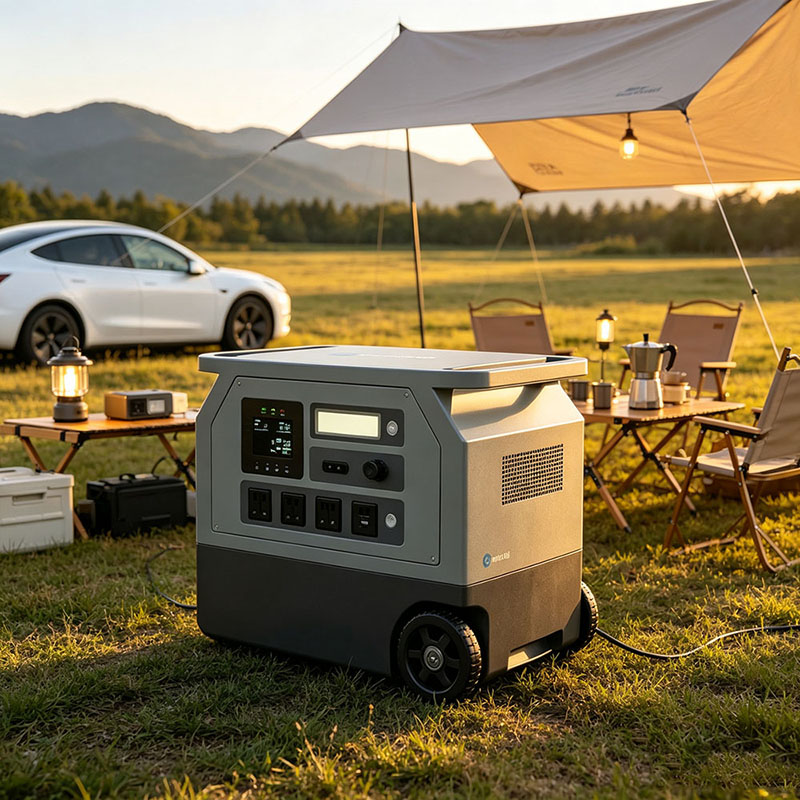
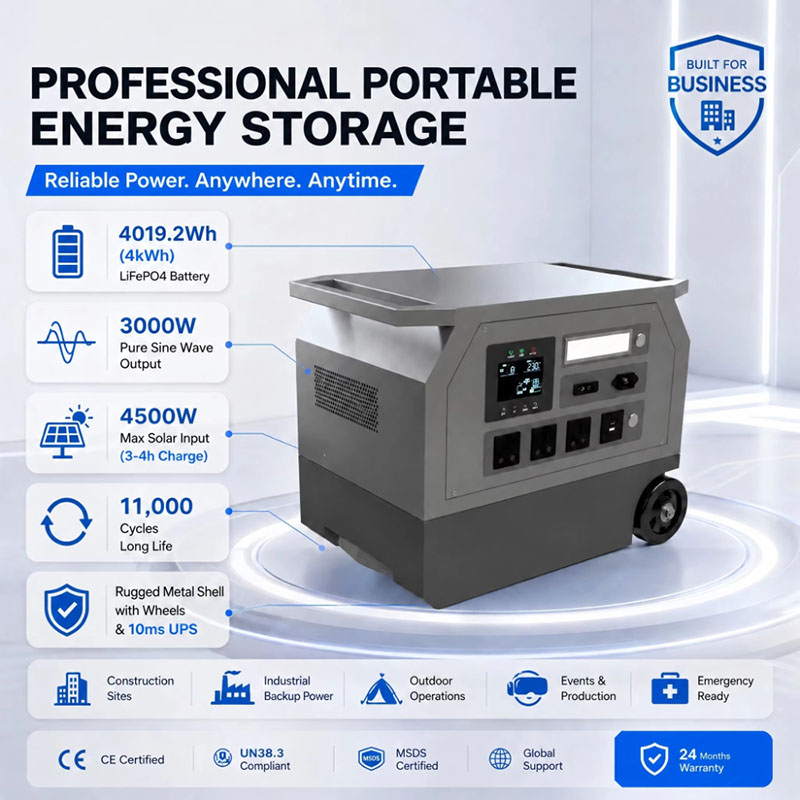
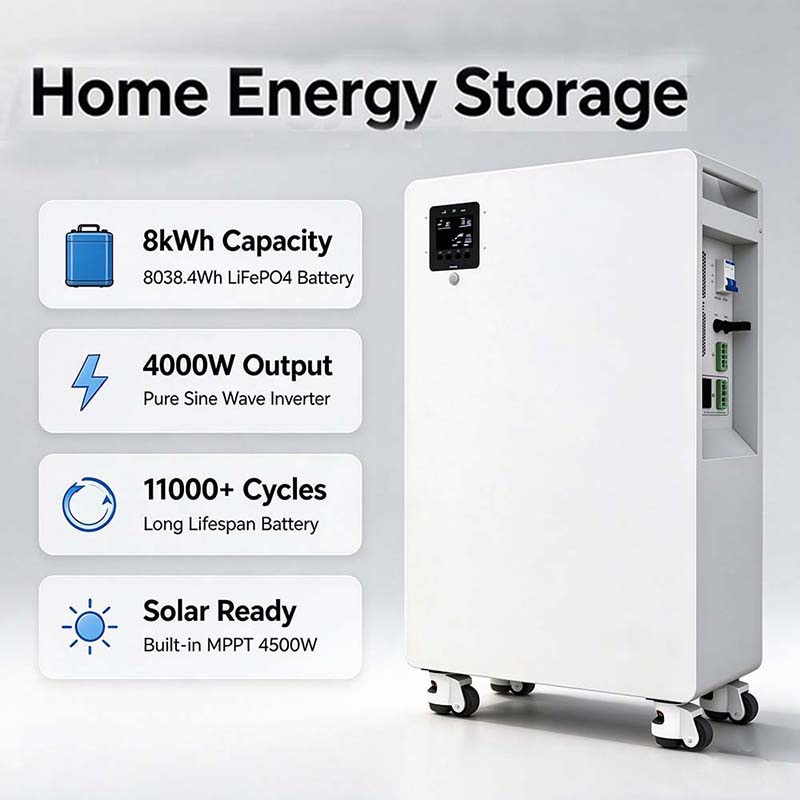
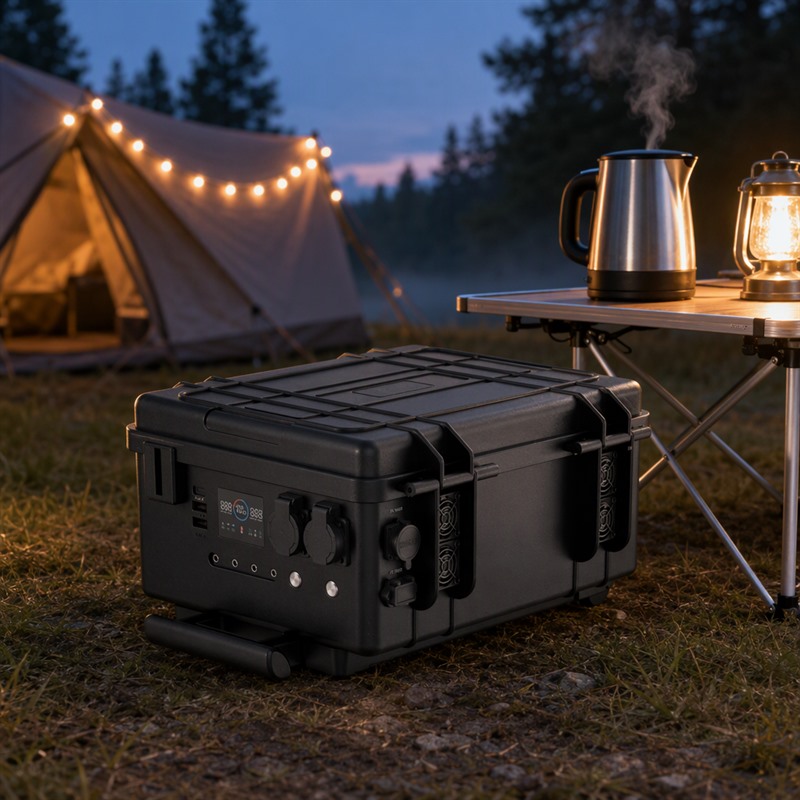
Built around a long-life LiFePO4 battery pack rated for 11000+ cycles, this 3000W portable power station delivers pure sine wave output with a 6000W surge — enough to run refrigerators, power tools, and nearly any household appliance during an outage. Engineered for both home backup and off-grid use, it supports fast AC charging (0–80% in about an hour) and up to 1,200W MPPT solar input for quiet, emissions-free power wherever you need it. With expandable battery capacity and UPS-grade switchover, it is a scalable, generator-free energy solution trusted by campers, RVers, and emergency-prepared households alike.
Details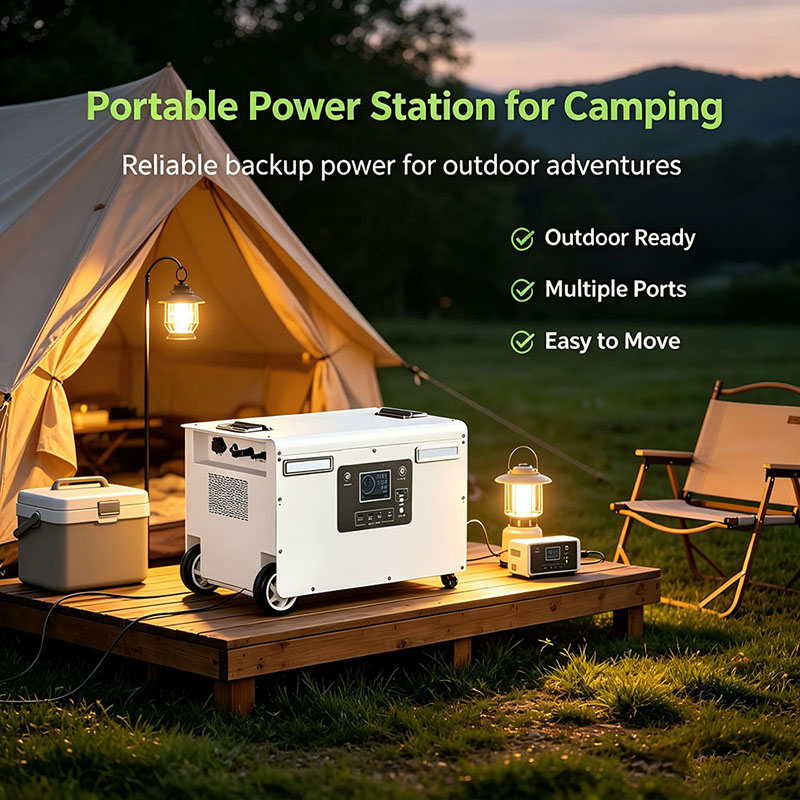
Prepare for anything with the LFP4 3600W Portable Power Station. Its durable LiFePO4 battery, fast recharge, and scalable storage provide reliable home backup, clean RV power, and silent off‑grid energy. Charge from solar, wall, or car. Keep your fridge and devices running always.
Details
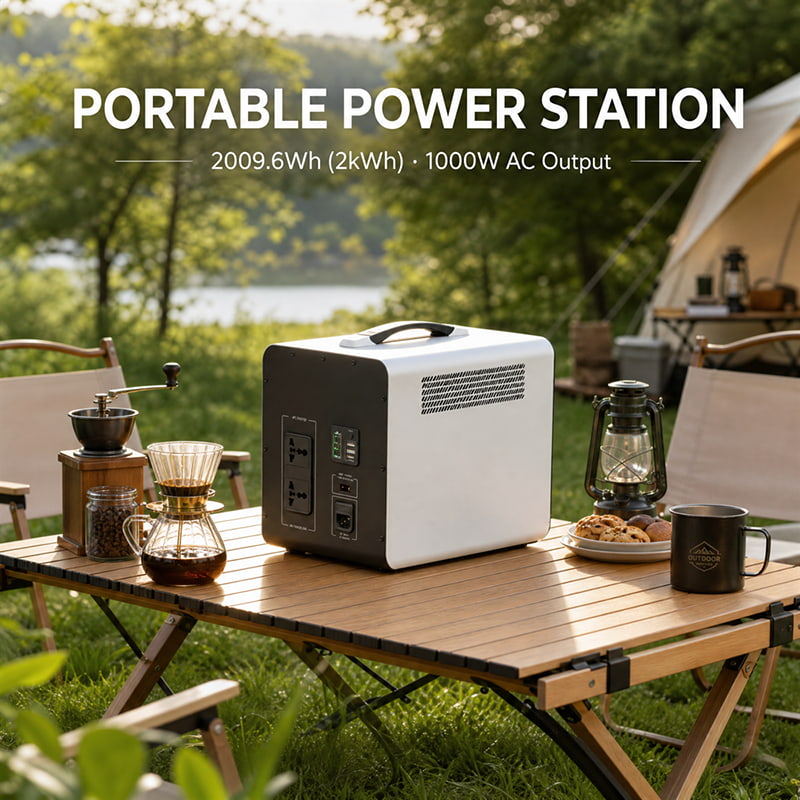
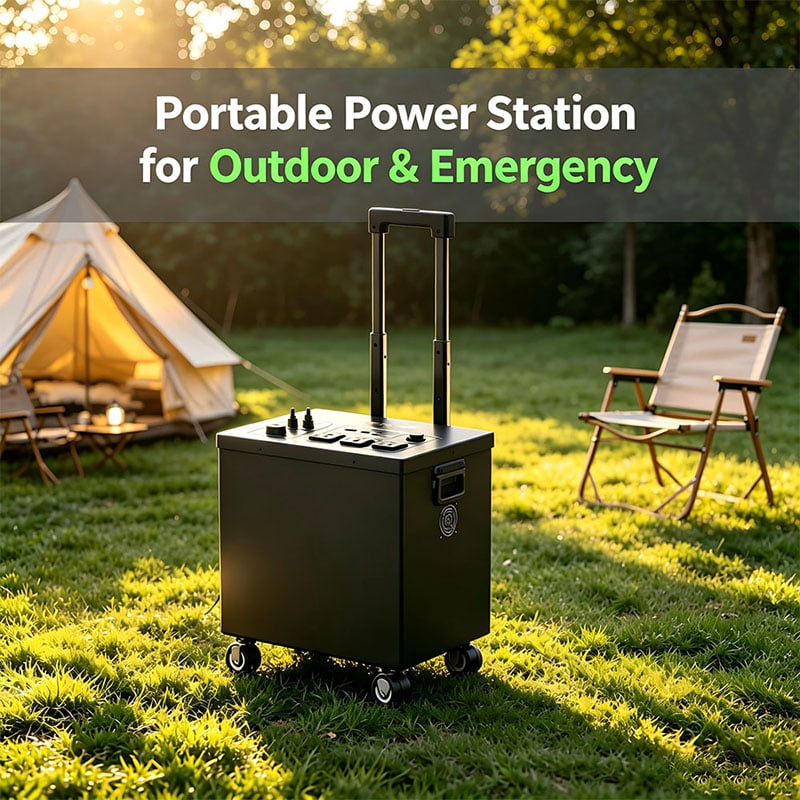
A Portable Power Station is a compact, rechargeable battery system that stores electricity for powering various devices and appliances on the go. It typically features multiple output ports (AC, DC, USB) and can be recharged via wall outlets, car chargers, or solar panels, making it ideal for outdoor adventures, emergency backup, and off-grid living.
Details
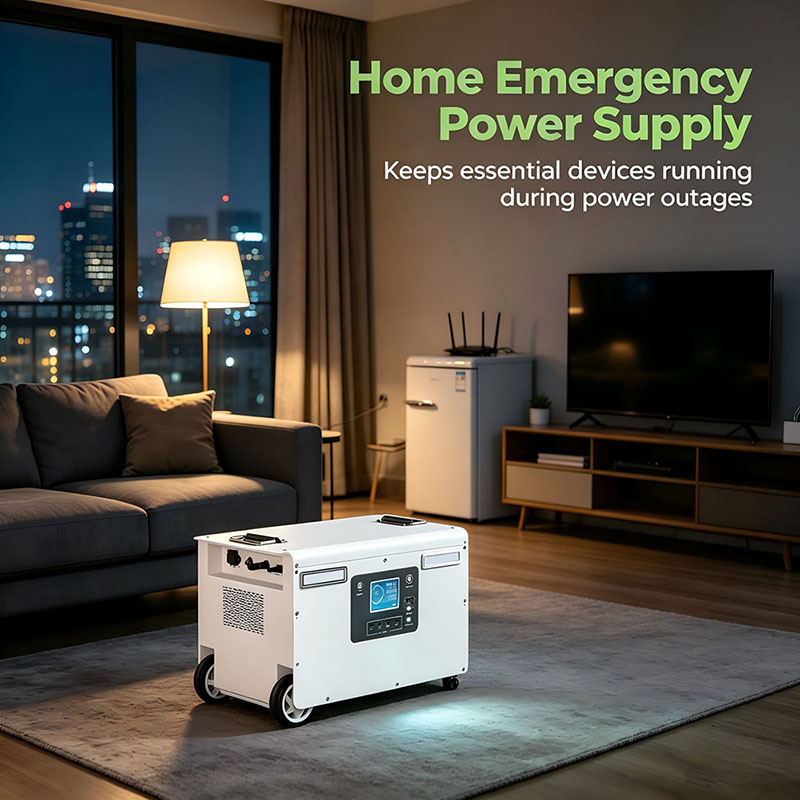
An emergency battery portable power station is a compact, rechargeable device designed to deliver instant electricity during power outages, natural disasters, or off‑grid situations. It stores energy in a high‑capacity internal battery and provides multiple output ports (AC, DC, USB) to keep essential devices like medical equipment, communication tools, and lighting running reliably when you need them most.
Details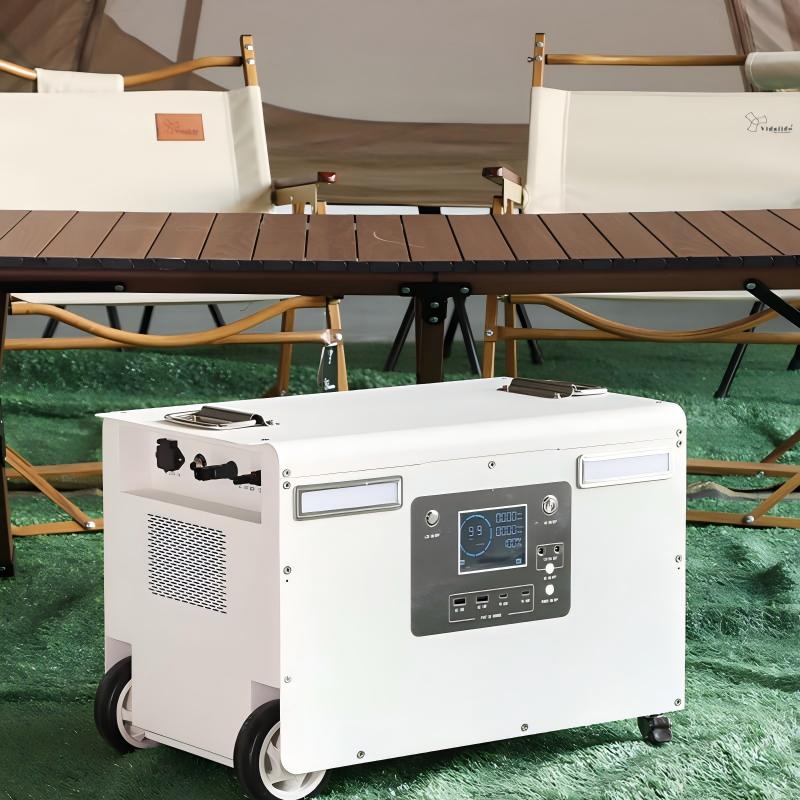
Prepare for anything. The LFP4 3600W portable power station combines a high-capacity LiFePO4 battery with fast charging and expandable capacity to deliver reliable home backup during power outages, clean energy for RV camping, and silent power for off-grid living. Recharge via solar panels, wall outlet, or car port. Keep your refrigerator, WiFi, and essential devices running — anytime, anywhere.
Details
A Portable Power Station is a compact, rechargeable device that provides reliable electricity for powering electronics and appliances during outdoor trips, emergencies, or off-grid living. Equipped with multiple output options—including AC, DC, and USB ports—and the ability to recharge via solar panels, it offers a flexible and eco-friendly energy solution.
Details
A Portable Power Station is a compact, rechargeable device designed to deliver dependable electricity for running electronics and appliances during outdoor adventures, emergencies, or off-grid living. Featuring multiple output ports (AC, DC, USB) and solar recharging capability, it provides a flexible and environmentally friendly power solution.
Details
A portable power station is a compact, rechargeable device that provides a reliable source of electricity for powering electronics and appliances during outdoor activities, emergencies, or off-grid living. Equipped with multiple output options like AC, DC, USB, and solar charging capabilities, it offers versatile and eco-friendly energy solutions.
DetailsSignup our newsletter to get update information, promotion and insight.


 IPv6 network supported