Home

Blog

Blog

  • Tin Roof Solar Mounting System: The Complete Installation Guide for Metal Roofs
    Tin Roof Solar Mounting System: The Complete Installation Guide for Metal Roofs
    Sep 18, 2026
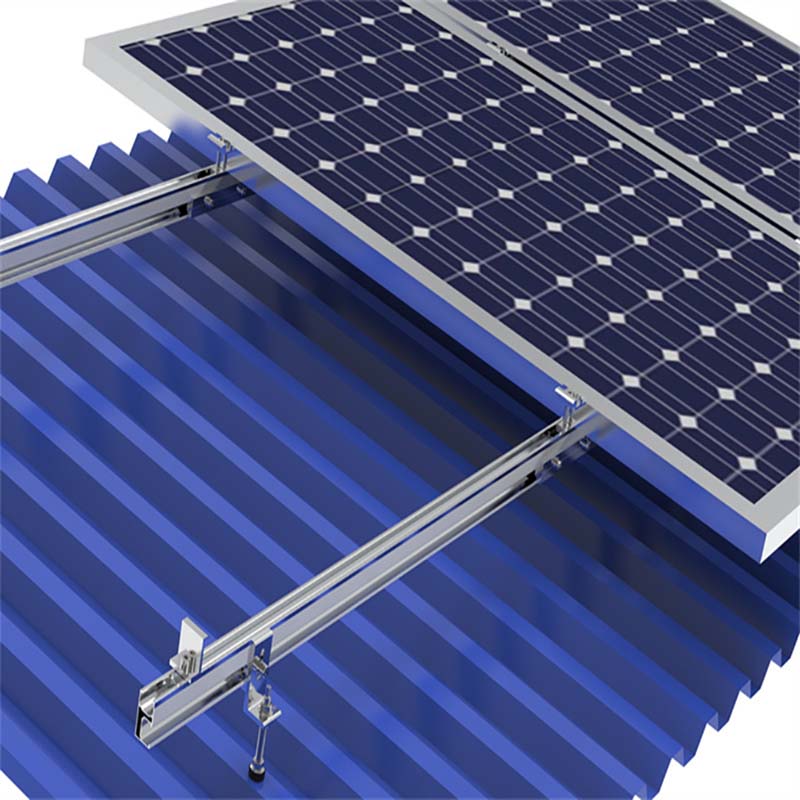
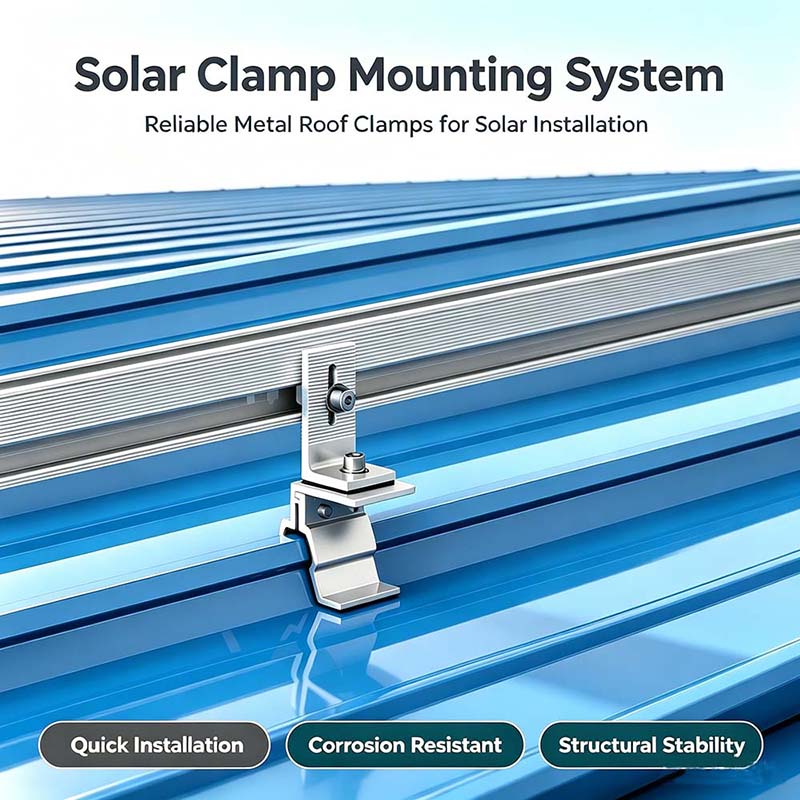
    Tin roofs are one of the most popular surfaces for commercial and industrial solar projects — and for good reason. A tin roof solar mounting system lets you fix photovoltaic modules onto corrugated, trapezoidal or standing seam metal roofing without weakening the structure, and in many cases without drilling a single hole. This guide explains what a tin roof solar mounting system is, how it is installed step by step, which advantages it delivers, and how to choose the right metal roof solar mounting system for your project. What Is a Tin Roof Solar Mounting System? A tin roof solar mounting system — also called a metal roof solar racking system or PV mounting structure — is the complete set of structural hardware that connects solar panels to a tin or metal roof. A standard kit contains aluminum mounting rails, L-feet brackets, mini rails, standing seam clamps, mid clamps and end clamps, together with bolts, EPDM sealing washers and grounding clips. The system transfers wind and snow loads from the modules into the roof purlins while keeping the roof completely watertight. Why Tin and Metal Roofs Are Ideal for Solar Large, uninterrupted surface area – a single warehouse roof can host hundreds of kilowatts of PV modules. Strong, light sheeting – steel and aluminum roofing allows long rails to span between purlins with fewer attachment points. Natural ventilation – the raised ribs of corrugated and trapezoidal sheets create airflow beneath the panels, lowering module temperature and improving energy yield. Reflective surface – bright metal roofing adds a bifacial gain on reflective roofs. Non-penetrating options – standing seam clamps keep the roof membrane and its warranty untouched. Key Components of a Tin Roof Solar Mounting System Mounting rails – anodized aluminum 6005-T5 rails in 2.4 m to 6 m lengths, sized by wind and snow load. L-feet brackets – the classic solution for corrugated and trapezoidal tin roofs; a compact angle bracket fixed to the crest of the sheet. Mini rails and mini rail brackets – short rails clamped directly onto the sheet ribs, ideal for short spans and fast installation. Standing seam clamps – non-penetrating clamps that grip the seam of a standing seam roof with no drilling at all. Mid clamps and end clamps – hold the module frame at the specified torque and keep the array perfectly aligned. Roof hooks and flashing – for penetrating installations on tile-look or insulated metal panels. EPDM gaskets, butyl sealant and grounding clips – seal every fastener and bond the array electrically. Types of Tin Roof Solar Mounting Systems 1. Corrugated tin roof – L-feet plus rail The most common and most economical configuration. L-feet are screwed into the crests of the corrugation, sealed with EPDM washers, and the aluminum rail is bolted on top. 2. Trapezoidal metal roof – mini rail system Trapezoidal sheets have wide, flat ribs, so a trapezoidal metal roof solar mounting kit with short mini rails and two fasteners per rib gives an extremely strong, low-profile and fast-to-install base. 3. Standing seam metal roof – non-penetrating clamps Where the roof warranty forbids penetrations, standing seam solar roof clamps grip the folded seam, so the roof membrane is never pierced. 4. Ballasted and rail-free systems For flat or very low-slope metal roofs, ballasted or rail-free mounts reduce hardware and labour to a minimum. How to Install Solar Panels on a Tin Roof: Step by Step Survey the roof. Check the sheet profile, sheet thickness, purlin spacing, roof age and the design wind and snow loads. Plan the layout. Fix row spacing, module orientation, walkways and edge zones, then mark every attachment point on the ribs. Prepare the fixing points. Pre-drill on the crest of the rib and always land on a purlin, never on the free span of the sheet. Seal and fix the brackets. Fit EPDM washers or butyl sealant under every L-foot or mini rail base. Mount and level the rails. Bolt the aluminum rails to the brackets and check alignment and height. Clamp the modules. Use mid clamps and end clamps at the torque specified by the module maker. Ground and bond. Install grounding clips or a bonding conductor across the array. Commission. Finish with insulation resistance, continuity and IV-curve testing. Main Advantages of Our Tin Roof Solar Mounting System 25-year design life. Anodized aluminum 6005-T5 rails and stainless steel fasteners that never rust. Non-penetrating options that protect the roof waterproofing and its warranty. Engineered load capacity – wind load tested for high-speed and coastal sites, snow load calculated per project. Fast installation. Pre-assembled, modular parts cut roof labour time dramatically. Corrosion resistance for coastal, chemical and heavy-industry environments. Universal compatibility with all standard framed modules, including large-format 182 mm and 210 mm panels. Complete kit in one order – rails, brackets, clamps, bolts, grounding and EPDM sealing. Engineering support – layout drawings, load calculations and installation manuals for every project. Choosing the Right Tin Roof Solar Mounting System: A Buyer's Checklist Roof type and sheet profile: corrugated, trapezoidal or standing seam, rib height and sheet thickness. Purlin spacing, purlin material and the real fixing positions available. Design wind speed, snow load and seismic zone from the local code. Distance to the coast or to chemical plants, to select the right surface treatment. Whether the roof warranty allows penetration at all. Certifications, test reports, warranty terms, lead time and engineering support. Where Tin Roof Solar Mounting Systems Are Used Tin roof solar mounting systems are specified every day for industrial warehouses, logistics parks, manufacturing plants, cold storage facilities, agricultural sheds, car parks and residential tin roofs — anywhere a large, strong and light metal roof needs to become a power plant. Frequently Asked Questions Can you install solar panels on a tin roof without drilling?Yes. Standing seam tin roofs can be fitted with non-penetrating clamps that grip the seam, and some trapezoidal profiles accept clamp-on mini rails — no hole is made in the roof sheet. How much does a tin roof solar mounting system cost?Cost depends on the roof profile, the module layout, the design wind and snow load and the rail specification. A complete kit is quoted per kilowatt or per module, so send us your roof drawing for an exact price. Will a solar mounting system void my roof warranty?Not if it is specified correctly. Non-penetrating clamps and properly flashed, EPDM-sealed fixings are accepted by most roofing manufacturers. How long does a tin roof solar installation take?A trained crew normally installs 100 to 200 modules per day with a pre-assembled rail and clamp kit. Get a Tin Roof Solar Mounting System Quote Whether you are a rooftop EPC contractor, a distributor or a facility owner, we can supply a complete tin roof solar mounting system engineered for your roof profile, wind and snow loads. Send us your roof type, module size and project location, and our engineers will return a full layout and quotation. Visit 9sunsolar.com to see the full range of metal roof solar mounting systems and PV mounting structures.
    Read More
  • Flat Roof Solar Mounting System: A Complete Installation Guide & Key Advantages
    Flat Roof Solar Mounting System: A Complete Installation Guide & Key Advantages
    Sep 16, 2026
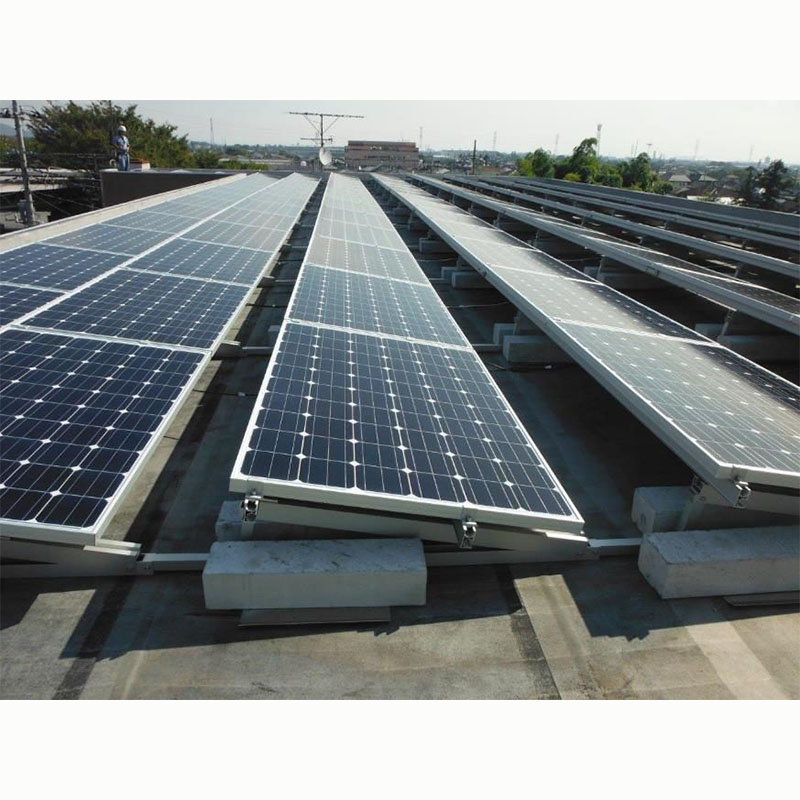
    Flat Roof Solar Mounting System: Installation Guide, Types & Key Advantages A flat roof solar mounting system is one of the most efficient ways to turn unused commercial rooftop space into a clean energy asset. From warehouses and factories to shopping centers and office blocks, flat roofs offer large, unobstructed areas that are perfect for solar panel mounting on flat roof structures. In this guide, we explain how these systems work, the main types available, and why the right flat roof solar racking can protect your roof while maximizing energy output. What Is a Flat Roof Solar Mounting System? A flat roof solar mounting system is a support structure designed to fix photovoltaic panels securely onto roofs with little or no slope. Unlike pitched-roof systems that follow the roofline, a flat roof solar racking system uses a precisely calculated tilt angle so the panels capture maximum sunlight. Most commercial flat roof solar mounting systems are engineered for ballasted installation, which means the whole array is held in place by its own weight instead of bolts driven through the roof membrane. This makes the flat roof solar panel installation process fast, clean, and reversible. Because the roof membrane is never pierced, the waterproofing guarantee stays intact — a decisive advantage for building owners and facility managers. Why Flat Roofs Are Ideal for Commercial Solar Commercial buildings are the most common site for solar mounting systems for flat roofs. Flat roofs typically carry fewer shading obstacles than ground areas, and the entire surface can be optimized with a modular layout. For warehouses, factories, distribution centers, and retail parks, a ballasted solar mounting system converts dead roof area into predictable long-term savings on electricity. Modern flat roof solar mounting systems also keep panels at an optimal tilt and row spacing, which reduces self-shading and improves cleaning access. Combined with high-albedo white roof membranes, a commercial flat roof solar installation can even run cooler and produce more energy per panel than many ground systems. Main Types of Flat Roof Solar Mounting Systems 1. Ballasted Solar Mounting System The ballasted flat roof mounting system is the most popular choice for low-slope commercial roofs. It uses concrete blocks or steel trays filled with ballast to hold the array down, with no roof penetration at all. This non-penetrating solar mounting system is ideal for roofs with a structural load allowance of around 10-15 kg/m² or more. 2. Penetrating / Mechanically Attached System Where roof structure or wind load makes ballast impractical, a penetrating system fixes rails directly to the roof deck with waterproof flashings. This solution suits roofs with limited load capacity and areas with extreme wind. 3. Adjustable Tilt System For roofs where the ideal angle cannot be achieved in one fixed position, adjustable tilt solar racking lets installers set the panel angle on site, improving seasonal yield without redesigning the whole layout. Key Components of a Flat Roof Solar Racking Kit A complete flat roof solar mounting system includes several precision-engineered parts: aluminum or galvanized steel rails, panel clamps, mid and end clamps, T-bolts and nuts, rubber or EPDM protection pads, wind deflectors, and pre-cast or on-site concrete ballast blocks. High-quality anodized aluminum is widely used because it is lightweight, corrosion-resistant, and suitable for coastal environments. Every component should be pre-assembled as far as possible so the flat roof solar panel installation can be completed in fewer man-hours. Key Advantages of a Flat Roof Solar Mounting System No roof penetration, full waterproofing protection. The ballasted flat roof solar mounting system never drills into the roof membrane, so the original waterproofing warranty remains valid. This is the single biggest reason warehouse and factory owners choose non-penetrating solar mounting. Fast and clean installation. Because most components are pre-assembled and no hot work is required, a commercial flat roof solar installation can be completed in days, not weeks, with minimal disruption to operations. Flexible panel orientation and tilt. Panels can be arranged south-facing at the optimal angle, and the layout can be adapted around roof obstructions such as skylights, AC units, and vents. Excellent wind resistance. High-quality flat roof solar racking is wind-tunnel tested to withstand strong gusts, with wind deflectors and calculated ballast keeping the array stable. Maximum space utilization. Every usable square meter of the roof can be planned, making solar mounting systems for flat roofs the most cost-effective way to scale up commercial solar capacity. Relocatable and upgradeable. Ballasted systems can be partially disassembled and reconfigured if the roof needs maintenance or the array needs to be expanded. Better energy performance. The elevated, tilted structure improves airflow under the panels, reducing heat buildup and keeping output closer to the panel’s rated performance. Flat Roof Solar Installation Considerations Before installing, a structural engineer should confirm the roof load capacity, since ballast adds weight distributed across the deck. Wind load calculations follow local codes and account for roof height, edge zones, and parapet details. The waterproofing membrane must be protected with rubber pads under all contact points, and skylights, HVAC units, and maintenance walkways must be mapped into the layout. Working with an experienced flat roof solar mounting system manufacturer ensures the design arrives with complete drawings, installation manuals, and wind calculations. Why Choose 9SUN SOLAR for Flat Roof Solar Racking? 9SUN SOLAR designs and supplies complete flat roof solar mounting systems for commercial and industrial projects worldwide. Every kit is manufactured from corrosion-resistant aluminum alloy and stainless steel, tested for durability, and delivered with clear installation documentation. Our engineers help you select the right ballast type, rail spacing, and tilt angle for your roof, so you receive a turnkey flat roof solar racking solution that is easy to install and built to last for the 25-year life of your solar array. Conclusion Whether you are equipping a warehouse rooftop or a large commercial building, a flat roof solar mounting system is a proven, low-risk way to generate clean power. Ballasted and non-penetrating designs protect your roof, cut installation time, and keep future maintenance simple. Contact 9SUN SOLAR today for a free layout design and quotation for your flat roof solar panel installation.
    Read More
  • PV Wall Bracket Installation System: A Complete Guide to Facade-Mounted Solar
    PV Wall Bracket Installation System: A Complete Guide to Facade-Mounted Solar
    Sep 15, 2026
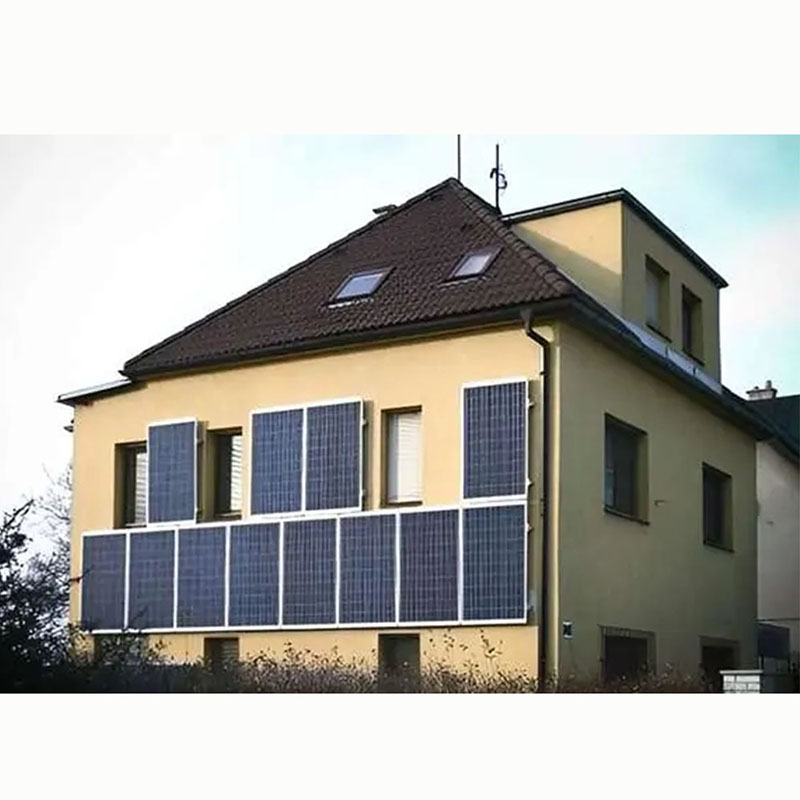
    Solar energy is no longer limited to rooftops. As urban space becomes more valuable and building designs grow more creative, the PV wall bracket installation system has emerged as a smart, space-saving way to generate clean power directly from building facades. Whether on a residential exterior wall, a commercial building, or an industrial facility, wall-mounted photovoltaic systems turn unused vertical surfaces into productive energy assets. What Is a PV Wall Bracket Installation System? A PV wall bracket installation system is a complete mounting solution that attaches solar panels securely to vertical building walls. It typically includes wall brackets, aluminum rails, clamps, and corrosion-resistant fasteners engineered to support the weight of the panels while withstanding wind loads, rain, and temperature changes. Unlike traditional roof racks, wall brackets are designed to work with the building’s structural surface, keeping the array flush, stable, and visually clean. The system is ideal for buildings where rooftop space is limited, shaded, or structurally unsuitable. By mounting panels on south-facing walls, property owners can still capture strong solar radiation without sacrificing any usable rooftop area. Key Advantages of PV Wall Bracket Systems 1. Maximizes Unused Vertical Space Wall surfaces that would otherwise serve no purpose are converted into power-generating areas. This is especially valuable on multi-story buildings where the facade area can be much larger than the roof footprint. 2. Seamless Architectural Integration Modern wall bracket systems allow panels to sit neatly against the facade, creating an integrated, professional appearance. As the images show, arrays can be arranged in continuous rows or between windows, blending renewable energy with the building’s design rather than disrupting it. 3. Reliable Structural Performance High-grade aluminum brackets and stainless steel fasteners deliver strong corrosion resistance and long service life. Engineered to handle wind uplift and dynamic loads, the system keeps panels stable even in harsh weather conditions. 4. Quick and Cost-Effective Installation Pre-engineered components simplify alignment and fastening, reducing installation time and labor costs. Fewer parts and standardized rails also make maintenance and future expansion straightforward. 5. Flexible for Every Building Type From residential homes to large industrial halls with sawtooth rooflines, wall bracket systems adapt to different facade materials, heights, and panel configurations. This flexibility makes them a practical choice for new builds and retrofit projects alike. Applications Across Building Types The PV wall bracket installation system adapts to a wide range of building types and project scales: Residential buildings: Homeowners gain clean energy without occupying roof space, with arrays arranged between windows for a tidy look. Commercial buildings: Businesses reduce electricity costs while projecting a sustainable brand image. Industrial facilities: Large-scale facade installations, such as those on sawtooth-roof factories, deliver significant energy output for high-consumption operations. Conclusion The PV wall bracket installation system is a versatile, durable, and space-efficient way to bring solar power to vertical surfaces. By combining strong structural design with clean architectural integration, it helps residential, commercial, and industrial buildings turn their walls into energy-generating assets. For projects where rooftops are limited or facades offer better sun exposure, wall-mounted solar is a solution worth serious consideration. Ready to learn more about our PV wall bracket installation systems? Contact our team today for product specifications, project consultation, and customized solar mounting solutions.
    Read More
  • 9Sunsolar New Energy Secures 3MW Rooftop Solar Project in Korea
    9Sunsolar New Energy Secures 3MW Rooftop Solar Project in Korea
    Aug 25, 2026
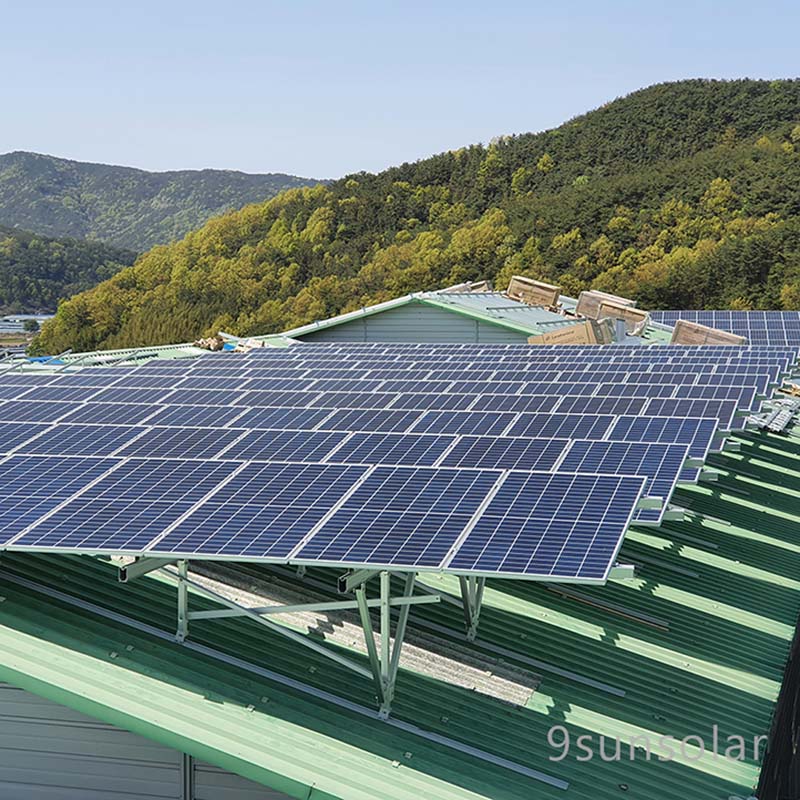
    Recently, the Korean business team of 9Sunsolar New Energy received good news--the company successfully won a 3MW rooftop solar photovoltaic project in Korea. This marks another significant achievement for 9Sunsolar New Energy in the Korean market and a strong testament to the company's commitment to customized solar mounting structures. 01.Fundamental Considerations – Elevated Design Is a "Must‑Have" for Korean Rooftop Projects In Korea, rooftop solar projects have unique design requirements. To boost power generation efficiency, elevated mounting designs are a very common need. Raising the structure not only optimizes the tilt angle of the modules to maximize sunlight exposure but also provides better ventilation and heat dissipation for the roof underneath. However, elevated designs are far more complex to engineer and produce than standard installations. Higher structures face greater challenges from wind loads and snow loads – Korea lies in the East Asian monsoon zone, where extreme weather such as typhoons and heavy snowstorms is not rare. The real test of a mounting supplier's technical capability lies in ensuring the structural safety of the system under various harsh weather conditions while simultaneously improving generation efficiency. 02.Seven Years of Proven Quality – Customized Elevated Solutions Are 9Sunsolar 's Strength Since its very first year of operation, 9Sunsolar  New Energy has successfully undertaken similar high‑difficulty elevated projects. After seven years of exposure to typhoons, blizzards, and other extreme weather, these early installations remain stable and show no strength‑related issues. Seven years is long enough to validate the true quality of a product. From the fierce storms of typhoon season to the heavy pressure of winter snow, 9Sunsolar 's mounting systems have withstood it all. The design and quality of these projects have earned high praise from Korean clients. Behind this praise lies 9Sunsolar  New Energy's relentless pursuit of customized solutions for every project. Tailored to the specific needs of the Korean market, the 9Sunsolar  team provides end‑to‑end services covering structural design, mechanical analysis, and quotation, ensuring that every project achieves the optimal balance between safety and efficiency while fully complying with local codes and standards. 03.9Sunsolar's Philosophy – Professional Customization That Creates Value for Customers   9Sunsolar New Energy is a specialized service provider of customized solar mounting structures and tailored solutions. Since its founding in 2018, the company has been dedicated to the R&D and export of photovoltaic mounting systems. It boasts an international business team fluent in Korean, English, Japanese, and other languages, enabling precise alignment with the localized needs of clients in different countries. The success in the Korean market is no coincidence. In recent years, Korea's commercial, industrial, and residential distributed solar demand has grown rapidly, placing higher requirements on the quality and customization capabilities of mounting structures. With years of technical expertise and hands‑on experience in complex projects, 9Sunsolar New Energy is increasingly becoming a trusted partner for more Korean customers. Winning this 3MW project marks a new starting point. 9Sunsolar New Energy will continue to create greater value for customers worldwide through professional technology, superior products, and attentive service.
    Read More
  • Clamp + Rail Solar Mounting: The Non-Penetrating Solution for Reliable Metal Roof Installations
    Clamp + Rail Solar Mounting: The Non-Penetrating Solution for Reliable Metal Roof Installations
    Aug 11, 2026
    When it comes to mounting solar panels on metal roofs, the Metal Roof Clamp System has emerged as one of the most reliable and efficient solutions available today. Whether you’re working with standing seam, trapezoidal, or corrugated metal roofing, this system offers a secure, non-penetrating attachment method that preserves your roof’s integrity while delivering exceptional holding strength. What Is a Metal Roof Clamp + Rail System? A metal roof clamp + rail system is a purpose-built photovoltaic mounting solution designed exclusively for metal roof profiles. Its defining feature is a non-penetrating attachment method: instead of drilling through metal roof sheeting, the system uses engineered clamps to mechanically grip the roof’s structural seams or ribs, securing aluminum rails that form the mounting platform for solar modules. Unlike traditional mounting methods that require drilling through the roof, this system uses clamp-based solutions that grip the seam or rib without piercing the metal sheet—a non-penetrative approach that preserves the roof’s waterproofing integrity. 1. Core Components The system relies on a streamlined, modular part set that simplifies logistics and installation: Roof clamps: The anchoring core of the system, manufactured in multiple profile-specific designs to match standing seam, trapezoidal, and corrugated roof geometries. They transfer wind uplift and snow loads directly into the roof’s structural framework. Aluminum mounting rails: Anodized aluminum rails (available in full-length and short-rail configurations) that create a stable, uniform base for PV modules. C-profile rails double as integrated cable channels for clean wiring management. Module fasteners: Mid-clamps (for securing adjacent panels) and end-clamps (for array edges) that lock framed PV modules to the rails with even, consistent pressure.   2. System Variants & Specifications The system is offered in two performance tiers to match project requirements: Premium type: Optimized for standard commercial and residential applications, rated for snow depths up to 99 cm and a reference wind speed of 46 m/s. Enhanced type: Built for extreme weather and heavy-load environments, with upgraded load-bearing capacity for deeper snow accumulation and higher wind speeds. All variants are CE-certified, constructed from corrosion-resistant anodized aluminum, and backed by a 10-year product warranty. They comply with major international design standards including EN 1990, EN 1991, AS/NZS 1170, and DIN EN 1991.   3. Compatible Roof Types Thanks to its interchangeable clamp designs, the system delivers universal compatibility across all mainstream metal roof profiles: Standing seam roofs (snap-lock, mechanical lock, T/bulb seam profiles) Trapezoidal metal sheet roofs Corrugated metal roofs Why Choose a Clamp + Rail System? The clamp + rail design addresses the most common pain points of metal-roof solar installation, delivering measurable advantages for installers, building owners, and project developers alike.   1. Zero Penetration, Zero Leak Risk This is the system’s most transformative benefit. By gripping existing roof ribs instead of drilling through sheeting, the mounting solution completely eliminates the risk of water intrusion. It also preserves the original roof manufacturer’s warranty—a critical protection for commercial and industrial building owners managing large roof assets.   2. Precision Fit for Every Roof Profile No two metal roof systems are identical. The clamp + rail platform comes with a perfect-fit guarantee: clamps are engineered to match the exact rib height, spacing, and seam geometry of each roof type. This tailored engagement maximizes gripping strength and eliminates compatibility gaps that can cause slippage or load failure.   3. Unmatched Versatility Across Project Scales From large industrial factories and logistics warehouses to public buildings and residential metal roofs, the system scales seamlessly. It accommodates all standard framed PV modules and works across a full range of roof slopes, making it a flexible solution for residential, commercial, and utility-scale rooftop projects.   4. Faster Installation, Lower Labor Costs Most components ship pre-assembled, and the clamp-on design requires no specialized welding or complex tooling. A two-person crew can complete mounting work in a fraction of the time required for traditional penetrating systems, reducing on-site labor hours, shortening project timelines, and lowering overall installed cost.   5. Proven Structural Durability Engineered for extreme weather performance, each clamp delivers a holding strength ranging from 1,500 to over 3,000 lbs. The system is tested to withstand wind speeds up to 60 m/s and snow loads up to 1.4 kN/m². Anodized aluminum construction provides excellent corrosion resistance, ensuring long-term reliability in coastal, industrial, and harsh climate environments.   6. Clean Aesthetics & Integrated Cable Management C-profile rails function as built-in cable raceways, allowing installers to route PV wiring neatly inside the rail profile. Available in natural aluminum or black anodized finishes, the system creates a low-profile, professional appearance that complements modern building architecture. How the System Works For Standing Seam Metal Roofs The standing seam clamp grips the vertical rib of the roof panel without penetration. The rail is then attached to the clamp using bolts or a holding bracket. Modules are secured to the rails using mid-clamps and end-clamps. The design allows for centric load distribution, eliminating leverage effects on the seam clamp.   For Trapezoidal and Corrugated Metal Roofs Short rails are fixed directly onto the crest of trapezoidal roof sheets using self-tapping sealing screws, often pre-assembled with EPDM seals. These short rails can be adjusted flexibly to accommodate different corrugation grids. Modules are then connected to the rails through mid and end clamps. Installation Overview Installing a Metal Roof Clamp + Rail System typically follows these steps: 1.Plan and mark clamp positions according to the system layout 2.Clean the roofing areas where clamps will be affixed 3.Attach clamps to the roof seams or ribs and secure with the specified torque 4.Install rails onto the clamps using L-feet or direct connections 5.Secure modules using mid-clamps and end-clamps 6.The entire process is designed to be intuitive, with many components arriving pre-assembled for maximum efficiency. Applications The Metal Roof Clamp + Rail System is widely used across various project types: 1.Industrial facilities – factories with large trapezoidal metal roofs 2.Commercial buildings – shopping centers, office buildings, logistics warehouses 3.Public buildings – schools, hospitals, sports facilities 4.Residential properties – homes with metal roofing Conclusion The Metal Roof Clamp + Rail System represents the gold standard for solar mounting on metal roofs. It combines non-penetrative attachment, rapid installation, exceptional holding strength, and cost-effective material usage into one integrated solution. Whether you’re an installer looking for efficiency, a building owner concerned about roof integrity, or a project developer focused on long-term reliability, this system delivers on every front. With proven performance across all major metal roof types and compatibility with a wide range of solar modules, it’s the mounting solution you can trust for decades to come. Ready to learn more about our Metal Roof Clamp + Rail Systems? Contact our team today for product specifications, pricing, and project consultation.
    Read More
  • Solar Roof Rail + L‑Feet System: The Smart Choice for 2026 Installers
    Solar Roof Rail + L‑Feet System: The Smart Choice for 2026 Installers
    Jul 31, 2026
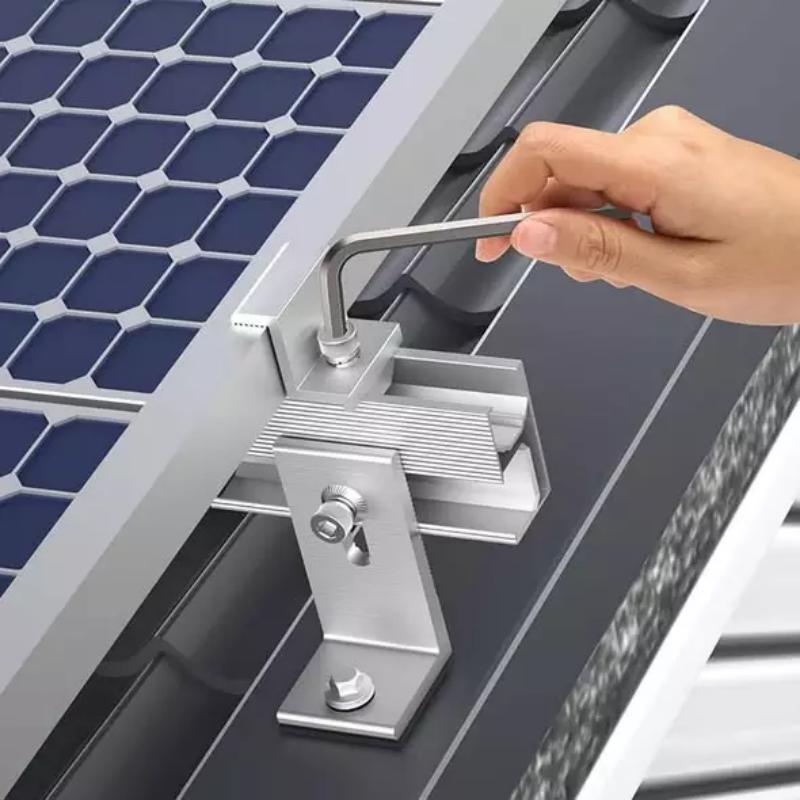
    Why the L‑foot + rail combo? It’s faster, more waterproof, and holds your panels for 25+ years. Here’s why this PV mounting system is replacing traditional hooks. What It Is Solar L‑Foot + Aluminium Rail = a complete rooftop solar mounting solution. L‑Foot: L‑shaped aluminium bracket, bolts directly to rafters. Built‑in EPDM gasket – one screw per foot. Rail: The aluminium channel that carries your solar panels. Provides the structural backbone. You’ll often see terms like PV mounting rails, aluminium solar panel mounting rails, and solar racking system – all referring to this core setup. Why Installers Love It (4 Key Benefits) 1. Superior WaterproofingTraditional hooks need 2–4 screws per point. L‑foot needs just one. The factory‑fitted EPDM pad seals better than hand‑cut flashing. Many brands offer 10‑ to 25‑year leak warranties. 2. 35% Faster InstallationNo hook‑slot measuring, no lead‑sheet cutting. One person fixes L‑feet, another snaps on rails. Lower labour, more jobs per quarter. 3. Sliding AdjustabilityTraditional hooks lock the rail position. Miss by 2 cm? Redrill. With L‑feet, the rail slides forward/backward before tightening – saves hours and prevents unnecessary roof penetrations. 4. Works on All Roof Types Asphalt shingles – direct mount, tuck gasket under shingle Clay/concrete tiles – lift tile, screw to decking, replace tile Standing seam metal – clamp adapter, zero penetrations Corrugated/trapezoidal metal – self‑tapping screws with sealing washers One L‑foot bracket system covers them all. Installation in 4 Steps Mark L‑foot positions on the roof. Secure L‑feet – with flashing for shingles, self‑tappers for metal. Slide aluminium rails onto the L‑feet (D‑nut fits into rail groove). Clamp panels using end and mid clamps, then install grounding. What to Look For Always check for UL 2703 certification – it covers mounting devices, clamps, and ground lugs. Also look for Class A Fire Rating; this simplifies permitting and insurance. Market Snapshot The global solar mounting market is over $30 billion in 2026 and growing fast. With distributed residential PV booming, waterproofing and installation speed are top priorities – exactly what the L‑foot + rail system delivers. Bottom Line Solar roof rail + L‑feet = fewer penetrations, faster installs, less stress on your roof, and proven reliability. Whether you’re an installer, contractor, or homeowner – this system gives you the peace of mind you need. Ready for a quote or sample? Contact us today for a custom solution tailored to your roof type.
    Read More
  • Flat Roof Solar Mounting Systems: Engineered Solutions for Reliable, High-Yield Solar Installation
    Flat Roof Solar Mounting Systems: Engineered Solutions for Reliable, High-Yield Solar Installation
    Jul 23, 2026
    If you own a commercial building, warehouse, or residential property with a flat roof, you may have wondered whether solar panels are an accessible option. The answer is a definitive yes.  A flat-roof photovoltaic installation consists of panels affixed to a roof surface with negligible or zero pitch. Flat-roof terms typically refers to a low slope of less than 10 degrees — just enough to allow for basic water drainage. Because flat roofs lack the natural angle, they require specialized mounting equipment to tilt the panels toward the sun for optimal energy capture. In many cases, flat roofs are actually better suited for solar installations than their sloped counterparts. With the right design and equipment, flat roofs can support higher solar performance that often deliver 10–15% higher energy yields than sloped roof systems at comparable locations.   What Are Our Flat Roof Mounting Systems? These are specialized structural systems that lift and angle solar panels on flat rooftops. All systems comply with EN 1990, EN 1991, AS/NZS 1170 and DIN EN 1991 standards, and carry CE certification. We build them with high-strength AL6005-T5 anodized aluminum and premium stainless steel hardware. They are rated for wind loads up to 80 m/s and snow loads up to 150 cm, backed by a 10-year warranty. We offer three core configurations to match different project needs: 1. Ballasted Roof Mounting System—9SunSolar As the mainstream drill-free option for commercial and industrial concrete flat roofs, this system relies on ballast blocks for fixation without penetrating the roof waterproof layer, which fully protects the original roof warranty and removes hidden leak risks. It adopts highly pre-assembled modular parts to cut installation time and labor costs. It is also built with anti-corrosion AL6005-T5 aluminum and stainless steel hardware to resist wind loads up to 80m/s and snow loads up to 150cm, supports single-side and double-side layouts, and can be fitted with optional wind deflectors to reduce wind uplift and lower total roof bearing weight and material expenses.       2. Adjustable Leg Mounting System—9SunSolar This mechanically anchored solution with expansion bolts for concrete roofs features fully adjustable front and rear legs to calibrate the optimal panel tilt angle matching local latitude for 10–15% higher power output than sloped roof systems, its rigid triangular aluminum structure delivers outstanding wind and snow resistance for long-term safe operation, pre-assembled core brackets simplify on-site assembly and speed up project delivery, and it fits almost all flat and low-slope concrete rooftops with strong universal adaptability.      3. Tripod Roof Mounting System—9SunSolar This lightweight non-penetrating tripod rack requires no roof drilling to avoid leaks and retain roof warranty, supports a wide tilt range of 0°–60° to lift power generation compared with flat panel laying, features fully pre-assembled components for ultra-fast installation and lower overall project costs, owns non-fixed layout design to allow easy reconfiguration or array expansion later as power demands change, and uses weather-proof anodized aluminum with stainless fittings covered by a 10-year full product warranty.    Why Choose Our Flat Roof Mounting Solutions? There are five reasons for your reference. 1. Higher energy yield Sloped roofs lock panels into a fixed angle and orientation. Flat roofs do not. You can align panels due south, and set the optimal tilt — typically 10–30°, calibrated to your local latitude. This flexible positioning delivers 10–15% more energy generation than comparable sloped-roof installations. A minimum 10° tilt also supports natural rain cleaning and proper water runoff. It preserves panel efficiency, and keeps your panel manufacturer’s warranty valid. 2. Zero roof damage, full waterproof protection Our ballasted and tripod systems use a 100% penetration-free design. We never drill into your roof membrane. This preserves your roof’s waterproofing integrity and original warranty, and completely eliminates leak risks — a top priority for building owners. For the mechanically attached adjustable leg system, we provide professional-grade flashing and sealants for every anchor point, ensuring long-term watertight performance. 3. Fast installation, low labour cost All systems feature a modular, pre-assembled design. Core components like leg brackets are factory-assembled before shipping. This drastically cuts on-site assembly time and reduces labor costs. Installation is faster and safer. Routine maintenance, panel cleaning and inspections become easier over the system’s 25+ year service life. 4. Maximum space utilization Flat roofs offer continuous, unobstructed surface area. You can fit more panels than on sloped roofs with chimneys, vents or multi-directional slopes. This makes our systems ideal for high-energy commercial and industrial sites, maximizing on-site self-consumption and speeding up return on investment. 5. Durable build for extreme conditions AL6005-T5 aluminum with anodized surface finish resists corrosion. Stainless steel hardware adds long-term reliability. The robust structure is engineered to withstand high wind uplift and heavy snow loads, meeting local building code requirements across diverse climate zones. How to Select the Right System for Your Project? Choose based on your roof structure, waterproof constraints and performance goals: 1. Pick the Ballasted System if roof penetration is prohibited and preserving your roof warranty is critical. It is the standard choice for large-scale commercial concrete flat roofs. Add optional wind deflectors to reduce total roof load. 2. Pick the Adjustable Leg System if maximizing energy yield with custom tilt angles is your priority. Its solid mechanical anchoring suits projects targeting peak solar performance. 3. Pick the Tripod System if you need fast deployment and flexible future expansion. Its reconfigurable design works perfectly for small and medium-sized projects. Our in-house engineering team provides full project support. We deliver custom load calculations, layout design and compliance guidance, all tailored to your local wind, snow and building code requirements. From system selection to after-sales service, we provide end-to-end solutions for your flat roof solar project. Important Considerations Before proceeding with a flat roof solar installation, keep these factors in mind:   1. Tilt is essential: Panels must never be installed flush against the roof surface. A minimum tilt of 10 degrees is required for energy production, drainage, and self-cleaning. Most manufacturers void warranties for flat installations without proper tilt. 2. Drainage: Elevated mounts must not obstruct water drainage. An improper layout can cause water pooling and lead to leaks. 3. Wind resistance: Flat roofs experience greater wind uplift forces, so wind-rated racking designed for flat roof solar arrays is essential. 4. Permitting: Check local building codes for required setbacks and firefighter access zones Conclusion You can absolutely install solar panels on a flat roof — and with the right flat roof mounting system, you may achieve better energy performance than a traditional sloped-roof installation. From flexible panel orientation and easier maintenance to the availability of non-penetrating ballasted systems that preserve your roof warranty, flat roofs offer numerous advantages for solar energy generation. Whether you choose a ballasted system, a mechanically attached solution, or a rail-based framework with durable metal flat roof solar mounting components, the key is working with experienced professionals who can design a system tailored to your roof’s structural capacity, local climate conditions, and energy goals. With proper planning, your flat roof can become a powerful platform for clean, cost-saving solar energy. Ready to explore solar for your flat roof? Contact our team today for a customized assessment and design proposal.      
    Read More
  • How to Maximize ROI on Agricultural Farmland Solar Mounting Systems
    How to Maximize ROI on Agricultural Farmland Solar Mounting Systems
    Jun 16, 2026
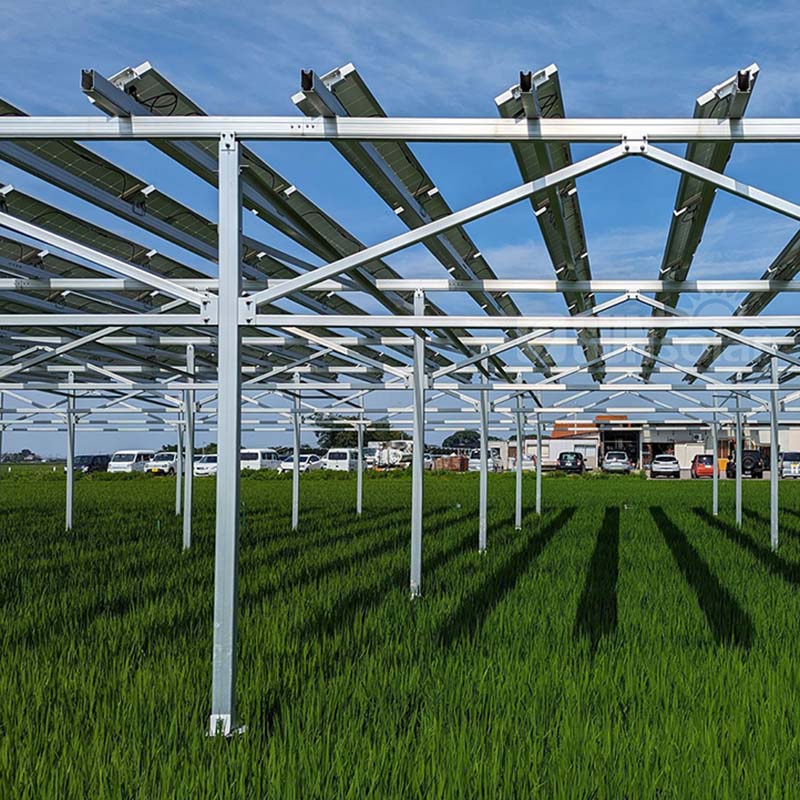
    The global solar farm market is expanding at a remarkable pace—from $140.94 billion in 2025 to $168.19 billion in 2026, a compound annual growth rate of 19.3%. At the same time, agrivoltaics—the practice of combining solar energy generation with agricultural production on the same land—has crossed a $5.5 billion global market in 2026. For farmers, landowners, and investors, agricultural solar mounting systems represent not just an energy investment, but a strategic land-asset decision. So how do you actually maximize ROI on farmland solar mounting systems in 2026? Here are the six key levers that separate profitable agrivoltaic projects from money-losing experiments. 1. Choose the Right Mounting System for Your Land Not all farm solar panels are created equal. The mounting structure you choose determines what you can grow, what equipment you can use, and ultimately, your bottom line. Here are the main system types in commercial operation today: Elevated Agrivoltaic Systems (3–5 meters): Panels installed at heights that allow large farm machinery—combine harvesters, tractors—to operate underneath. Best for cereal crops, corn, and broad-acre farming. Standard 2.1-Meter Rise Systems: The lowest-cost viable option that still allows tractor access and sheep grazing. In Germany's 15 MW Adorf project, cattle graze comfortably under panels mounted just over 2 meters high. Vertical Bifacial Systems: Panels installed vertically, facing east-west, occupying only about 2% of the land area while leaving 98% available for agriculture. Ideal for orchards and pasture in high-insolation regions. Ground-Level Agrivoltaics (1.1–1.5 meters): A newer, lower-cost approach using flexible block units rather than conventional rows. Structure costs run just €0.03–0.04/W—compared to €0.06/W for 2.1-meter systems and €0.09/W for 4-meter designs. Excellent for poultry and livestock operations where predator protection is a bonus. Solar Greenhouses: Panels mounted on greenhouse roofs, with crops growing underneath. A 1 MW system can generate both electricity revenue and premium crop income from high-value produce. The key decision point: Your choice depends entirely on what you grow, what machinery you use, and your local land-use regulations. Choose wrong, and you'll sacrifice either crop yield or energy output—or both. 2. Optimize Design Parameters: The Art of Light-Sharing The core challenge of dual-use solar is light-sharing—balancing crop light requirements against energy production. Here are the critical design parameters: Ground Coverage Ratio (GCR): Standard solar farms run at 0.5–0.6 GCR. Agrivoltaic systems need to drop to 0.2–0.3, with row spacing of 8–12 meters to leave room for crops and machinery. Yes, you sacrifice some capacity—but you keep your agricultural income stream. Panel Height: According to Fraunhofer ISE research, 5-meter elevated agrivoltaic systems generate about 75% of the electricity per unit area compared to dense ground-mount systems. But higher panels mean more light transmission and better airflow for crops. Bifacial Modules: Pairing bifacial solar panels with optimized racking captures reflected light from the ground below. Yield gains of 15–25% over monofacial panels are now common, and bifacial module costs have fallen 25–30% since 2024. Glass-glass modules also degrade at just 0.3–0.5% annually versus 0.7% for conventional panels—stretching your revenue horizon. Tracking Systems: Single-axis trackers can increase energy production by 25–35% compared to fixed mounts. While tracking adds $0.15–$0.35 per watt to project costs (a 10–20% premium at utility scale), the revenue upside often justifies it. According to analysis by the Institute of Energy Economics at the University of Cologne, tracker systems achieved a 43% higher market value than fixed south-facing installations. Even better: tracker-based agrivoltaic systems allow 60–80% of land to remain in agricultural use. 3. Crunch the Numbers: Real Costs and Returns in 2026 Agricultural solar mounting systems cost more than standard ground-mount—but the returns are also higher. Cost Breakdown Installed costs for agrivoltaic systems run $1.50 to $2.33 per watt—20 to 50 percent above standard ground-mount. The premium comes from: Elevated mounting structures (+15–25% capex versus ground-mount solar) Wider row spacing (reduces panel density) Foundations and engineering for agricultural compatibility For a 1 MW agrivoltaic system, you're looking at roughly €40,000–60,000 per year in electricity revenue, plus whatever crop income you generate. Revenue Streams—Diversify or Die Electricity Sales: Power Purchase Agreements (PPAs) for projects commissioned in early 2026 currently range between €63 and €70/MWh. Feed-in tariffs in major markets provide guaranteed cash flows that offset the 15–20% capital premium. Crop Income: Shade-tolerant crops—lettuce, berries, peppers, herbs—often maintain or even increase yield under partial shading, especially in hot climates where panels reduce heat stress and water evaporation. Land Lease: If you're not operating the system yourself, land lease rates for agrivoltaic projects reach €800 to €2,500 per hectare per year in Europe and $700 to $1,400 per acre in the US. Solar developers typically sign 25- to 40-year leases at $1,000 to $3,000 per acre annually. Sheep Grazing: The "solar sheep" model is proving highly profitable. Researchers at Western University found that optimized agrivoltaic sheep grazing models can reach an ROI of up to 43%. The animals graze under panels, saving feed costs and eliminating mechanical mowing. Carbon Credits: Emerging carbon markets are beginning to recognize agrivoltaic projects for their dual emissions-reduction and land-preservation benefits. Real-World ROI Examples Germany: Diversified annual profits of €15,000–235,000 depending on farm scale Malaysia (oyster mushroom cultivation) : Agrivoltaic systems delivered 42.13% higher annualized ROI and 13 months earlier payback compared to conventional PV plants Ontario sheep grazing: Optimized auction models reached 43% ROI General agrivoltaic: Land productivity increases by 60–70% compared to single-use agriculture or solar alone The economics are clear: the dual revenue streams from crops and electricity now warrant a 15–25% capital premium over conventional solar. 4. Pick the Right Crops—Not All Plants Like Shade Not every crop belongs under solar farm panels. Here's what the research shows: High-Compatibility Crops (yield stable or improves): Lettuce, berries, peppers, herbs, tomatoes Shade-tolerant vegetables that benefit from reduced heat stress and water evaporation Oyster mushrooms (42%+ ROI improvement documented) Medium-Compatibility Crops (need elevated panels, low GCR): Cereals and grains—yield drops unless panel density is below 0.20 GCR Rice—a Jiangsu pilot showed only 3.2% yield drop, but electricity + brand premium lifted per-acre income 11% High-Value Applications: Tea plantations (PV-integrated tea fields being researched by USDA) High-value berries and lettuce where tracker systems are already deployed The principle: Don't design for "maximum power." Design for "maximum crop yield within acceptable power generation." In 2026, leading farms are moving toward spectrum-adapted crop portfolios—matching crop selection to the specific light transmission characteristics of their panels. 5. Leverage Policy Incentives—They're Worth Real Money 2026 is the year agrivoltaics policy goes mainstream. Solar farm incentives are proliferating globally: Europe Italy's Agrisolare: €1.5 billion allocated for farm solar Germany's KfW: Below-market-rate loans for agricultural solar France: Specific agrivoltaics legislation with a 450 MW cooperative project driven by 35 growers UK Smart Export Guarantee: Export payments for farm-scale solar generation Germany's DIN SPEC 91434: The first dedicated agrivoltaics standard Asia-Pacific Japan: 6,100+ agrivoltaic sites; 2040 renewables roadmap prioritizes agrivoltaic capacity India's PM-KUSUM: Targets 10,000 MW of decentralized solar plants on agricultural land; a dedicated 10 GW agri-PV component is planned China: 500+ commercial-scale projects integrating aquaculture, field crops, and livestock North America US: 600+ agrivoltaic projects documented by the National Lab InSPIRE team Colorado: Agrivoltaics Research and Demonstration Grant program for FY 2026–27 Oregon: Agrivoltaics Task Force established to study solar siting on agricultural lands New Jersey: Solar Renewable Energy Certificate program targeting 3,750 MW by 2026 Critical alert: The US House-passed farm bill contains provisions that would restrict USDA financial assistance for certain ground-mounted solar projects on agricultural land. However, the bill includes exceptions for projects converting less than 5 acres—or less than 50 acres if the majority of energy is used on-site. Know your local rules before you commit. 6. Avoid the Hidden Risks—What's in Your Contract? The agrivoltaic sector is maturing, and 2026 is seeing a surge in disputes over operations and maintenance (O&M) responsibilities. Here are three clauses that belong in every contract: ① Performance Guarantees: If panel degradation exceeds 0.45% annually, the supplier compensates you for the lost energy—in cash. ② Structural Response: If mounting structures fail (e.g., a torn greenhouse film under panels), response within 2 hours, replacement within 48 hours. ③ System Downtime: If the smart control system goes down for more than 2 hours, the operator pays 200% of the daily crop value lost. One Shandong project lost three pepper planting cycles because a contract lacked clause #2—a storm shredded greenhouse film and finger-pointing dragged on for months. Conclusion: ROI in Agrivoltaics Is a Multiplier Game Agricultural farmland solar mounting systems aren't just about "bolting panels to the ground." They're a land-asset upgrade. The global agrivoltaics market is projected to grow from $15.25 billion in 2026 to $56.83 billion by 2031—a 30.1% CAGR. Europe's 2026 is the "scale-up year," when agrivoltaics shifts decisively from isolated pilots to investment-ready infrastructure. The farms that win in this space will be those that: Choose the right mounting system for their specific crops and machinery Optimize design parameters (height, GCR, tracking) for both crops and power Diversify revenue (electricity + crops + grazing + carbon) Pick crops that thrive under partial shade Stack every incentive they qualify for Write bulletproof contracts that protect against O&M disputes One piece of land. Two income streams. Farming continues, power is generated, and the ROI multiplies.  
    Read More

  • Solar Cables: Powering the Future of Renewable Energy
    Solar Cables: Powering the Future of Renewable Energy
    Jul 22, 2025
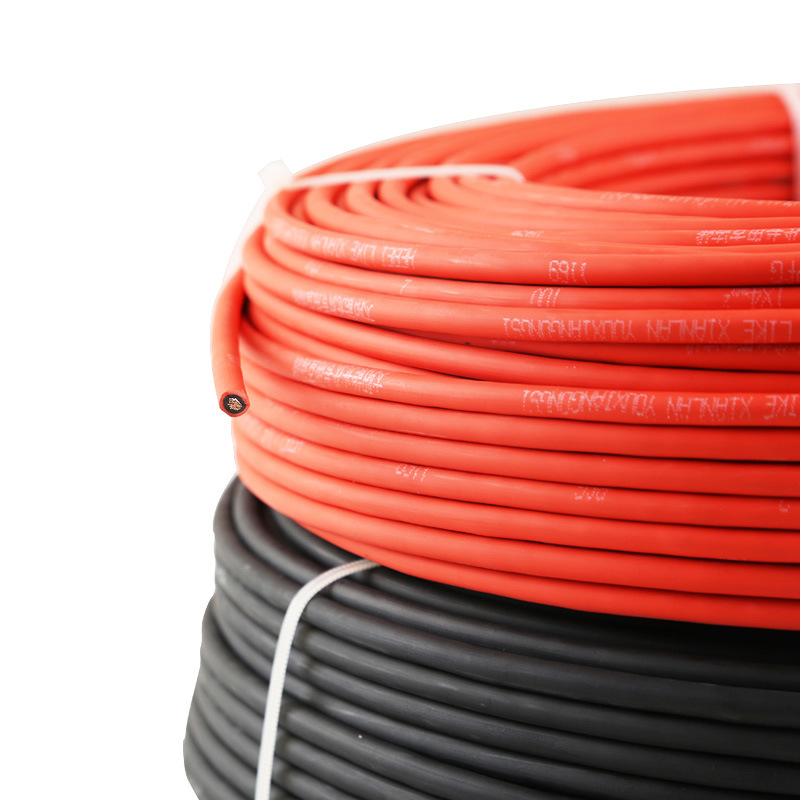
    In the rapidly expanding world of renewable energy, solar power stands out as a leading source of clean, sustainable electricity. Behind every efficient solar panel system, there’s a critical component that often goes unnoticed but plays a vital role in ensuring optimal performance: solar cables. These specialized cables are the lifelines of solar installations, responsible for transmitting the electricity generated by solar panels to inverters, batteries, and ultimately to the grid or end - use devices. Let’s delve into the world of solar cables, exploring their features, types, advantages, and common applications. ​ What Are Solar Cables?​ Solar cables, as the name suggests, are specifically designed to handle the unique demands of solar energy systems. Unlike standard electrical cables, they must withstand harsh environmental conditions, including extreme temperatures, ultraviolet (UV) radiation, moisture, and chemical exposure. Made from high - quality materials, solar cables are engineered to be durable, flexible, and resistant to aging, ensuring long - term reliability in outdoor and often remote locations.​ The core function of solar cables is to carry direct current (DC) electricity generated by solar panels. Since solar panels produce DC power, which is then converted to alternating current (AC) by inverters for use in homes and businesses, the cables need to efficiently transmit DC electricity without significant power loss. ​ Types of Solar Cables​ Solar cables can be categorized based on their use in different parts of a solar power system. The two main types are:​ 1.PV (Photovoltaic) Module Cables: These cables connect individual solar panels to each other, forming strings or arrays. They are typically smaller in diameter and are designed to handle the low - voltage, high - current output of individual panels. PV module cables are often pre - attached to solar panels at the factory, with connectors (such as MC4 connectors) that allow for easy and secure interconnection.​ 2.DC Link Cables: These cables are used to connect the solar panel arrays to the inverter. They carry the combined DC power from multiple panels, so they are larger in diameter and capable of handling higher currents than PV module cables. DC link cables are usually installed in conduits or trenched underground to protect them from external damage.​ In addition to these, there are also AC cables used in solar systems, which transmit the AC power from the inverter to the electrical panel or grid. While not strictly "solar cables," they are an important part of the overall system and must be compatible with the inverter and local electrical codes. ​ Advantages of Solar Cables​ Solar cables offer several key advantages that make them essential for solar power systems:​ 1.Weather Resistance: They are built to withstand extreme temperatures, from freezing cold to scorching heat, as well as UV radiation, rain, snow, and humidity. This ensures they can operate reliably in outdoor environments for many years.​ 2.Durability: Solar cables are made from tough materials that are resistant to abrasion, chemicals, and mechanical stress. This makes them less likely to be damaged during installation or over time, reducing the need for frequent replacements.​ 3.Low Power Loss: The high - quality conductors in solar cables have low electrical resistance, minimizing power loss during transmission. This helps to maximize the efficiency of the solar power system, ensuring that more of the electricity generated by the panels is used or stored.​ 4.Flexibility: Despite their durability, solar cables are flexible, making them easy to install in tight spaces or around obstacles. This flexibility also helps to reduce the risk of damage during installation.​ 5.Long Lifespan: With proper installation and maintenance, solar cables can last for 25 years or more, matching the lifespan of most solar panels. This long lifespan ensures that the system remains cost - effective over time.​ Common Applications of Solar Cables​ Solar cables are used in a wide range of solar power installations, including:​ 1.Residential Solar Systems: In homes with rooftop solar panels, solar cables connect the panels to the inverter, which is usually located in the garage or basement. They are also used to connect the inverter to the home’s electrical panel, allowing the solar - generated electricity to power household appliances.​ 2.Commercial and Industrial Solar Installations: Large - scale solar arrays on commercial buildings, warehouses, and industrial facilities rely on solar cables to connect thousands of panels. These systems often require long runs of DC link cables to connect the arrays to central inverters.​ 3.Ground - Mounted Solar Farms: Utility - scale solar farms, which cover vast areas of land, use extensive networks of solar cables to connect the panels to inverters and transformers. The cables are often buried underground to save space and protect them from damage.​ 4.Portable Solar Systems: Smaller, portable solar devices such as solar chargers, camping solar kits, and RV solar systems also use solar cables to connect the panels to batteries or charging devices. These cables are usually lightweight and flexible for easy transport.​ Conclusion​ Solar cables may not be the most visible part of a solar power system, but they are undoubtedly one of the most important. Their ability to withstand harsh conditions, efficiently transmit power, and last for decades makes them essential for the success of any solar installation. As the demand for solar energy continues to grow, the role of high - quality solar cables in ensuring reliable and efficient power transmission will only become more crucial. Whether you’re installing a small residential system or a large - scale solar farm, choosing the right solar cables is a decision that will pay off in the long run.
    Read More
  • Solar Balcony Brackets:The Future of Urban Solar Energy
    Solar Balcony Brackets:The Future of Urban Solar Energy
    Jul 03, 2025
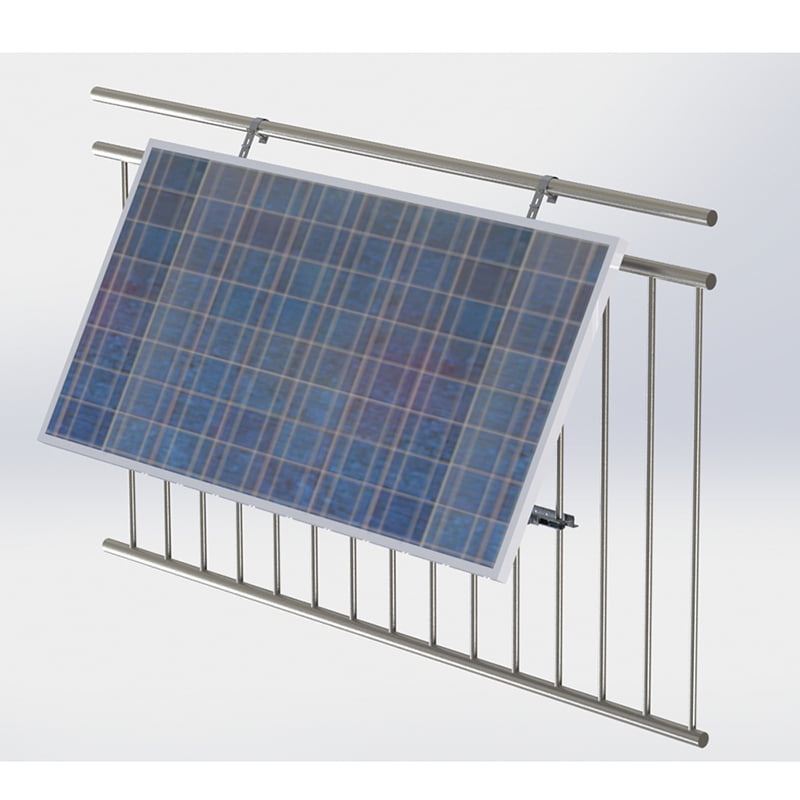
    In the quest for sustainable energy solutions, urban dwellers often face a common challenge: limited space for solar panel installations. Traditional rooftop solar systems may not be feasible for apartment residents or those with shaded roofs. Enter solar balcony brackets—an innovative and space-efficient way to harness solar power right from your balcony. What Are Solar Balcony Brackets? Solar balcony brackets are mounting systems designed to securely attach solar panels to balcony railings, walls, or overhangs. These brackets allow renters, condo owners, and urban residents to generate their own clean energy without needing a full rooftop setup. Key Benefits of Solar Balcony Brackets ✅ Space-Saving Design – Perfect for apartments, townhouses, and small balconies.✅ Easy Installation – No roof penetration or complex mounting required.✅ Portable & Adjustable – Many brackets allow for tilt adjustments to maximize sunlight exposure.✅ Cost-Effective – Lower installation costs compared to traditional solar setups.✅ Sustainable Living – Reduce your carbon footprint with renewable energy. How Do Solar Balcony Systems Work? A typical solar balcony setup includes: Solar Panels (usually lightweight, plug-and-play modules) Mounting Brackets (adjustable for optimal sun angle) Microinverters or Balcony Inverters (to convert DC power to AC) Connection to Home Grid or Battery Storage (for immediate use or energy storage) Some systems even allow direct plug-in to balcony outlets, feeding solar energy directly into your home’s circuit. Who Should Consider Solar Balcony Brackets? Apartment & condo residents who can’t install rooftop solar Renters looking for a temporary, removable solar solution Eco-conscious homeowners wanting to supplement their energy needs Urban gardeners powering small appliances or lighting Installation Tips Check local regulations and HOA rules before installing. Ensure the brackets are securely fastened to avoid wind damage. Optimize panel angle based on your location’s sun exposure. Consider plug-and-play solar kits for hassle-free setup. Final Thoughts Solar balcony brackets are revolutionizing urban solar adoption, making renewable energy accessible to more people. Whether you want to lower electricity bills, reduce reliance on the grid, or simply embrace green living, a balcony solar setup could be the perfect solution. Ready to harness the sun’s power from your balcony? Explore solar bracket options today!
    Read More
  • Understanding Solar Ground Support Systems: Design Variations and Benefits
    Understanding Solar Ground Support Systems: Design Variations and Benefits
    Apr 23, 2025
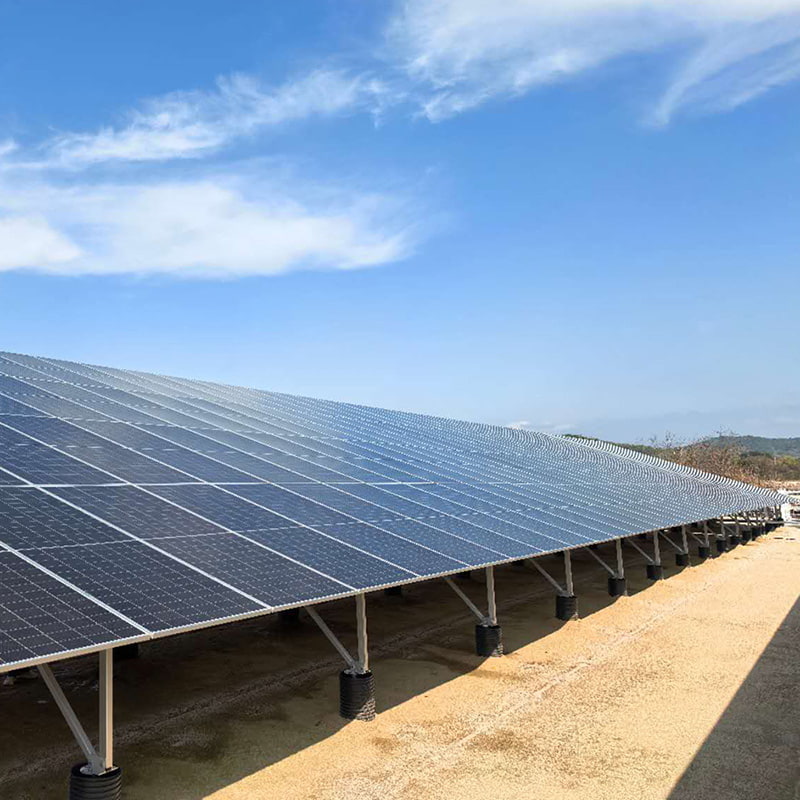
    Understanding Solar Ground Support Systems: Design Variations and Benefits Solar panel ground support structures provide a stable foundation for photovoltaic arrays, offering flexibility across diverse terrains and project requirements. Multiple mounting configurations exist, each tailored to specific performance, environmental, and budgetary needs. 1. Fixed-Angle Mounting Systems Design: Permanent tilt angle set according to geographic latitude. Key Benefits: Economical installation and operation. Minimal upkeep due to static components. Resilient against extreme weather. Preferred for utility-scale solar farms. 2. Manually Adjusted Seasonal Systems Design: Periodic angle modifications to align with shifting sun paths. Key Benefits: Moderately improved generation (5–15%) over fixed systems. Affordable upgrade from fixed mounts. Adaptable to seasonal solar position changes. 3. Single-Axis Solar Trackers Design: Automated east-to-west rotation tracking daily sun movement. Key Benefits: Significant output boost (20–30%) versus fixed arrays. Ideal for commercial and industrial installations. Enhanced power density per land area. 4. Dual-Axis Solar Trackers Design: Full sun-following capability across both daily and seasonal paths. Key Benefits: Maximum energy harvest (up to 40% gain). Essential for high-latitude regions. Perfect for precision applications like scientific facilities. 5. Elevated Pole Mounts Design: Raised panel arrays on vertical supports. Key Benefits: Minimal ground footprint on rough landscapes. Reduced vegetation interference. Compatibility with tracking mechanisms. 6. Non-Invasive Ballasted Platforms Design: Weight-secured bases eliminating ground disturbance. Key Benefits: Zero penetration for protected surfaces. Rapid deployment without foundations. Modular portability for temporary sites. Why Choose Ground-Based Solar Arrays? Superior Thermal Regulation: Natural cooling enhances performance. Precision Positioning: Unrestricted alignment optimization. Expandable Configurations: Simplified capacity increases. Accessible Servicing: Ground-level maintenance access. Avoiding Rooftop Limitations: Eliminates structural concerns. Large-Project Suitability: Optimal for utility-grade deployments. Selecting the Optimal System Project-specific factors—including financial parameters, site characteristics, energy objectives, and spatial constraints—determine the ideal solution. While fixed-angle systems offer budget-friendly reliability, tracking variants deliver peak productivity. Ballasted designs protect delicate sites, and pole mounts conquer challenging topography. Need guidance for your specific application? Consult our solar engineering specialists.
    Read More
  • The Future of Parking: Aluminum Solar Carports That Power Your Life
    The Future of Parking: Aluminum Solar Carports That Power Your Life
    Apr 07, 2025
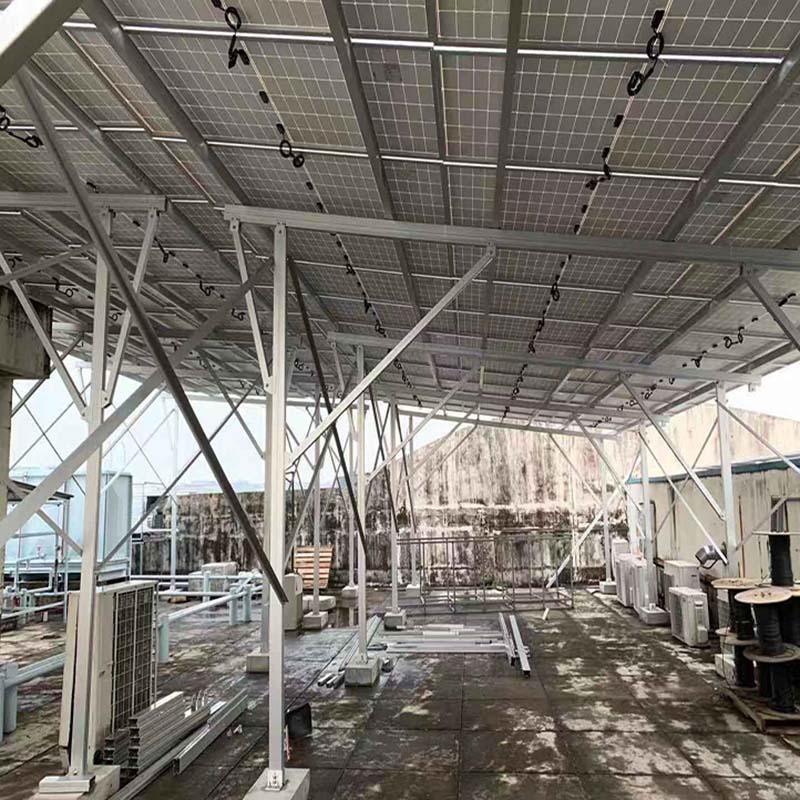
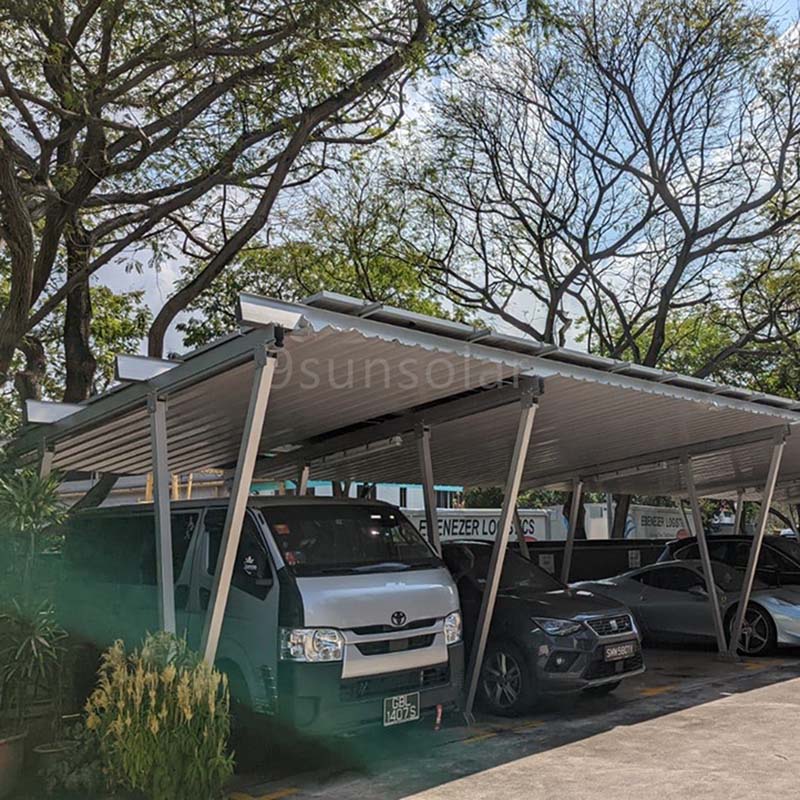
    As renewable energy takes center stage, solar carports have evolved from simple shade structures to intelligent energy generators. Leading this revolution are aluminum solar carports – combining unmatched durability with sleek aesthetics to create parking solutions that actually pay for themselves. 5 Reasons Aluminum Solar Carports Outperform the Competition 1.Featherlight but Unbreakable Weighing 66% less than steel yet equally robust, aluminum frameworks support solar arrays without straining structures – perfect for retrofitting existing spaces. 2.Self-Protecting Metal Aluminum's natural oxide coating acts as an invisible shield, making it impervious to rust even in salty coastal air or tropical humidity. 3.Architectural Chameleon From matte black to champagne bronze, powder-coated aluminum adapts to any design scheme while maintaining crisp, contemporary lines that elevate property values. 4.Dual-Revenue Generator These smart structures slash electricity bills while potentially earning income through net metering – transforming parking lots into power plants. 5.Install-and-Forget Convenience Unlike wood or steel, aluminum never needs repainting or rust treatment – just an occasional rinse to maintain its like-new appearance for decades. Style Meets Function: 5 Solar Carport Designs 1. Floating Canopy (Single-Cantilever) Perfect for: Luxury homes Innovation: Column-free design creates the illusion of a hovering roof Bonus: Uninterrupted parking and charging access 2. Corporate Peak (Double-Slope) Enterprise solution: Office complexes and shopping centers Smart engineering: Angled roofs maximize solar capture and snow shedding Scale advantage: Covers 12+ vehicles in a single structure 3. Urban Solar Deck (Flat-Top) Metropolitan favorite: Apartment buildings and municipal garages Hidden power: Low-profile panels blend into cityscapes Tech edge: Integrated monitoring systems track energy production 4. AeroWave (Curved Roof) Statement piece: Resorts and high-profile campuses Wind-tested: Aerodynamic shape withstands 120mph winds Design bonus: Creates stunning light patterns underneath 5. Infinite Solar Grid (Modular System) Industrial solution: Universities and factory complexes Future-proof: Add units like Lego blocks as needs grow Smart infrastructure: EV charging and IoT connectivity ready Beyond Parking: The Solar Carport Revolution Today's aluminum solar carports represent a paradigm shift in how we think about infrastructure. They're no longer just shelters, but: Energy assets with 25+ year lifespans Architectural enhancements that increase property appeal Sustainable statements that demonstrate environmental leadership From a homeowner's driveway to Amazon's massive fulfillment center installations, aluminum solar carports deliver the perfect trifecta: beauty that inspires, engineering that endures, and technology that pays dividends. Ready to transform your parking space into a power producer? Explore our gallery of aluminum solar carport installations and calculate your potential savings today. [View Design Portfolio] | [Get a Custom Quote] | [Calculate ROI] This version: Uses more compelling, benefit-driven language Incorporates technical details while keeping it engaging Positions the product as both practical and aspirational Includes clear CTAs Better visual hierarchy for scanning More specific performance claims Would you like me to adjust the tone (more technical/premium/casual) or emphasize certain aspects like commercial vs residential applications?
    Read More
1 2

leave a message

leave a message
If you are interested in our products and want to know more details,please leave a message here,we will reply you as soon as we can.
submit
Contact Us : melody@9sunsolar.com

Home

Products

whatsApp

contact