
leave a message
If you are interested in our products and want to know more details,please leave a message here,we will reply you as soon as we can.
If you own a commercial building, warehouse, or residential property with a flat roof, you may have wondered whether solar panels are an accessible option. The answer is a definitive yes.
A flat-roof photovoltaic installation consists of panels affixed to a roof surface with negligible or zero pitch. Flat-roof terms typically refers to a low slope of less than 10 degrees — just enough to allow for basic water drainage. Because flat roofs lack the natural angle, they require specialized mounting equipment to tilt the panels toward the sun for optimal energy capture. In many cases, flat roofs are actually better suited for solar installations than their sloped counterparts.
With the right design and equipment, flat roofs can support higher solar performance that often deliver 10–15% higher energy yields than sloped roof systems at comparable locations.
These are specialized structural systems that lift and angle solar panels on flat rooftops. All systems comply with EN 1990, EN 1991, AS/NZS 1170 and DIN EN 1991 standards, and carry CE certification. We build them with high-strength AL6005-T5 anodized aluminum and premium stainless steel hardware. They are rated for wind loads up to 80 m/s and snow loads up to 150 cm, backed by a 10-year warranty.
We offer three core configurations to match different project needs:
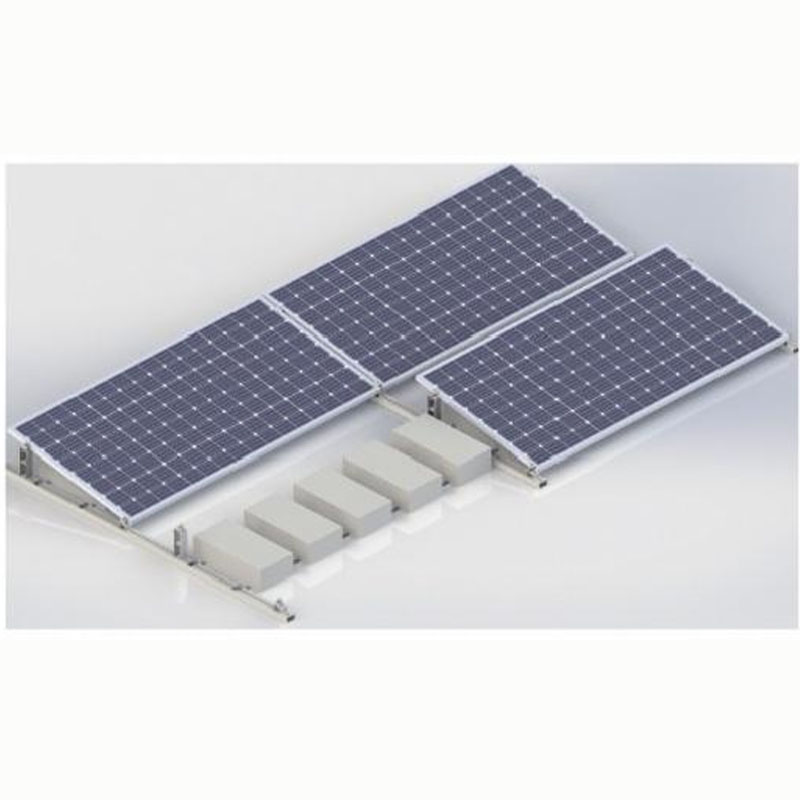
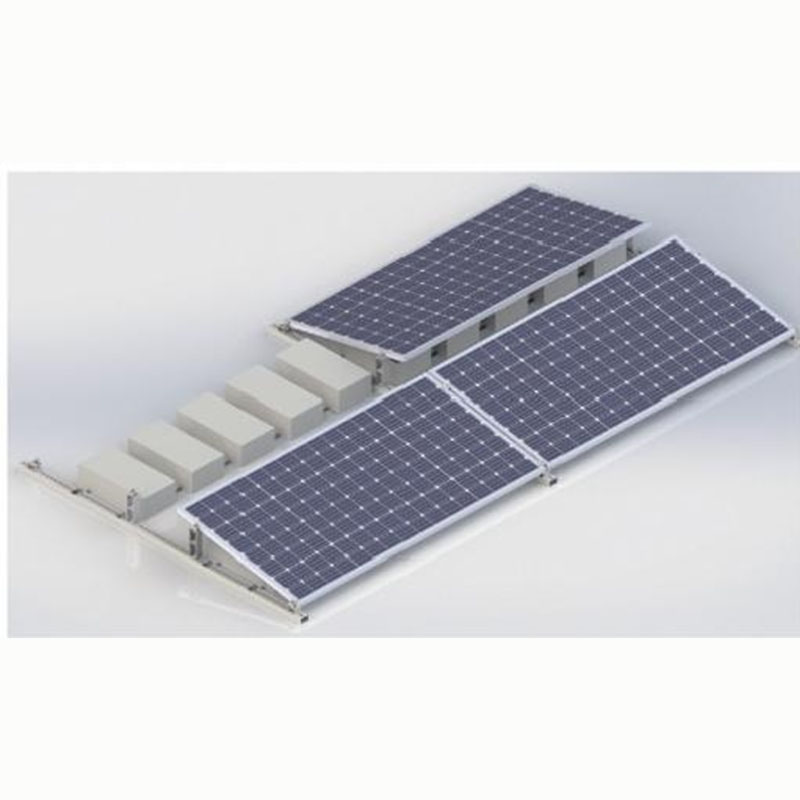
1. Ballasted Roof Mounting System—9SunSolar
As the mainstream drill-free option for commercial and industrial concrete flat roofs, this system relies on ballast blocks for fixation without penetrating the roof waterproof layer, which fully protects the original roof warranty and removes hidden leak risks. It adopts highly pre-assembled modular parts to cut installation time and labor costs. It is also built with anti-corrosion AL6005-T5 aluminum and stainless steel hardware to resist wind loads up to 80m/s and snow loads up to 150cm, supports single-side and double-side layouts, and can be fitted with optional wind deflectors to reduce wind uplift and lower total roof bearing weight and material expenses.
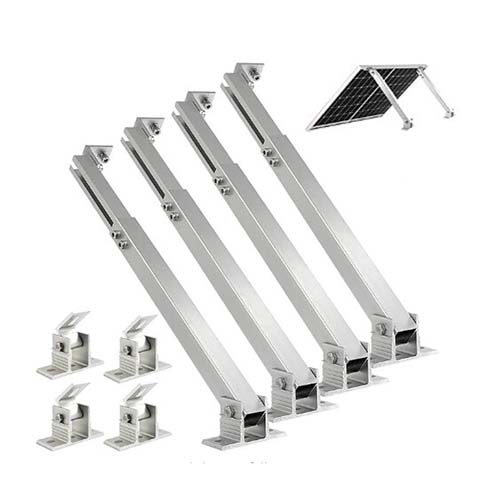
2. Adjustable Leg Mounting System—9SunSolar
This mechanically anchored solution with expansion bolts for concrete roofs features fully adjustable front and rear legs to calibrate the optimal panel tilt angle matching local latitude for 10–15% higher power output than sloped roof systems, its rigid triangular aluminum structure delivers outstanding wind and snow resistance for long-term safe operation, pre-assembled core brackets simplify on-site assembly and speed up project delivery, and it fits almost all flat and low-slope concrete rooftops with strong universal adaptability.
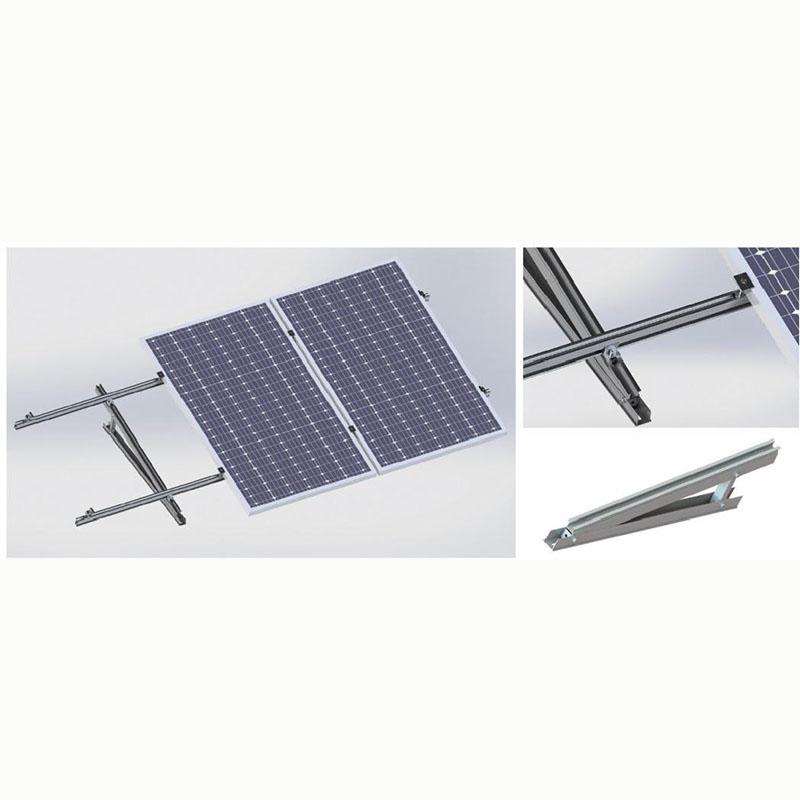
3. Tripod Roof Mounting System—9SunSolar
This lightweight non-penetrating tripod rack requires no roof drilling to avoid leaks and retain roof warranty, supports a wide tilt range of 0°–60° to lift power generation compared with flat panel laying, features fully pre-assembled components for ultra-fast installation and lower overall project costs, owns non-fixed layout design to allow easy reconfiguration or array expansion later as power demands change, and uses weather-proof anodized aluminum with stainless fittings covered by a 10-year full product warranty.
Choose based on your roof structure, waterproof constraints and performance goals:
1. Pick the Ballasted System if roof penetration is prohibited and preserving your roof warranty is critical. It is the standard choice for large-scale commercial concrete flat roofs. Add optional wind deflectors to reduce total roof load.
2. Pick the Adjustable Leg System if maximizing energy yield with custom tilt angles is your priority. Its solid mechanical anchoring suits projects targeting peak solar performance.
3. Pick the Tripod System if you need fast deployment and flexible future expansion. Its reconfigurable design works perfectly for small and medium-sized projects.
Our in-house engineering team provides full project support. We deliver custom load calculations, layout design and compliance guidance, all tailored to your local wind, snow and building code requirements. From system selection to after-sales service, we provide end-to-end solutions for your flat roof solar project.
Before proceeding with a flat roof solar installation, keep these factors in mind:
1. Tilt is essential: Panels must never be installed flush against the roof surface. A minimum tilt of 10 degrees is required for energy production, drainage, and self-cleaning. Most manufacturers void warranties for flat installations without proper tilt.
2. Drainage: Elevated mounts must not obstruct water drainage. An improper layout can cause water pooling and lead to leaks.
3. Wind resistance: Flat roofs experience greater wind uplift forces, so wind-rated racking designed for flat roof solar arrays is essential.
4. Permitting: Check local building codes for required setbacks and firefighter access zones
You can absolutely install solar panels on a flat roof — and with the right flat roof mounting system, you may achieve better energy performance than a traditional sloped-roof installation. From flexible panel orientation and easier maintenance to the availability of non-penetrating ballasted systems that preserve your roof warranty, flat roofs offer numerous advantages for solar energy generation.
Whether you choose a ballasted system, a mechanically attached solution, or a rail-based framework with durable metal flat roof solar mounting components, the key is working with experienced professionals who can design a system tailored to your roof’s structural capacity, local climate conditions, and energy goals. With proper planning, your flat roof can become a powerful platform for clean, cost-saving solar energy.
Ready to explore solar for your flat roof? Contact our team today for a customized assessment and design proposal.
Signup our newsletter to get update information, promotion and insight.


 IPv6 network supported