
leave a message
If you are interested in our products and want to know more details,please leave a message here,we will reply you as soon as we can.
EV adoption is no longer limited by the cars — it is limited by where drivers can plug in. A well-planned EV charging station turns an ordinary parking space into a service, a fleet depot into a night-time asset and a workplace into a reason for customers to stay longer. 9Sunsolar supplies AC and DC charging hardware from 7 kW wall units to 80 kW public stations. This short guide explains which class fits which site, what to check before ordering and how solar can carry part of the load.
7 kW Type 2 EV charger. The workhorse of home, office and hotel charging. A Type 2 unit delivers a full overnight charge from a standard three-phase supply, which is exactly what a car parked for six to ten hours needs. It is quiet, compact and the lowest-cost way to add charging points at scale.
30 kW DC fast charger. Built for fleet depots, car dealerships, workshops and taxi operators. A 30 kW unit tops a battery up during a lunch break or a service visit, so vehicles return to work instead of waiting overnight. It is the practical middle ground between slow AC charging and expensive high-power hardware.
80 kW EV charging station. For highway service areas, retail hubs and public charging plazas where drivers expect a short stop. Higher power means more sessions per day from the same parking bay, and the site earns from throughput rather than dwell time.
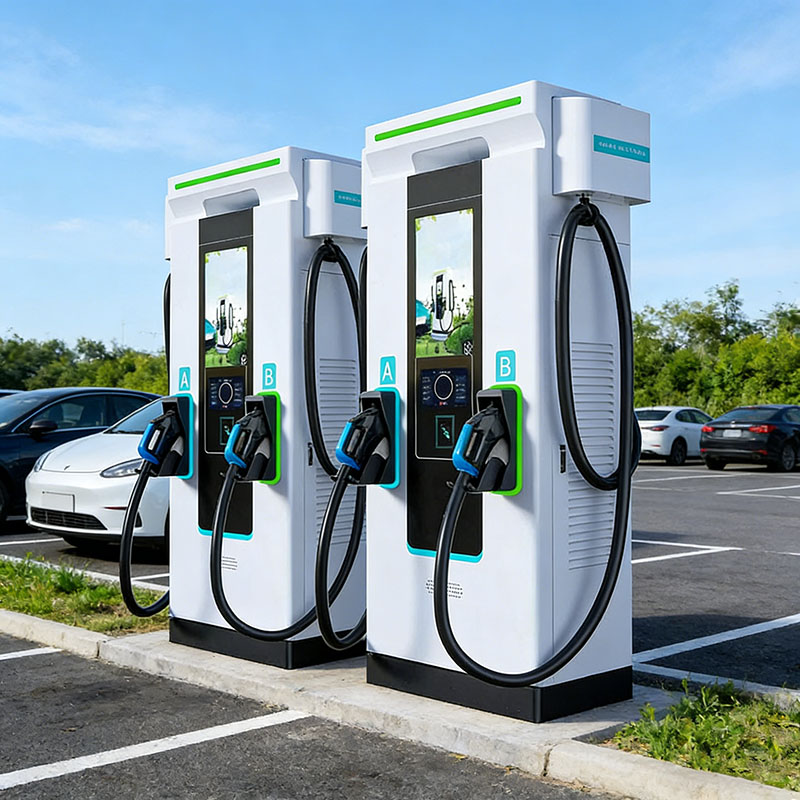
The right unit is decided by three numbers: how long a vehicle stays, how much power the site can deliver and how many sessions per day the bay must support.
A charging site and a solar array are a natural pair. A solar carport or rooftop PV system produces during the day, and daytime charging absorbs that output instead of exporting it at a low price. For workplaces and retail sites, the combination cuts net import and protects the project from rising tariffs. Because 9Sunsolar already engineers carport structures and mounting systems, the canopy, cable route and charger can be planned as one package rather than three separate purchases.
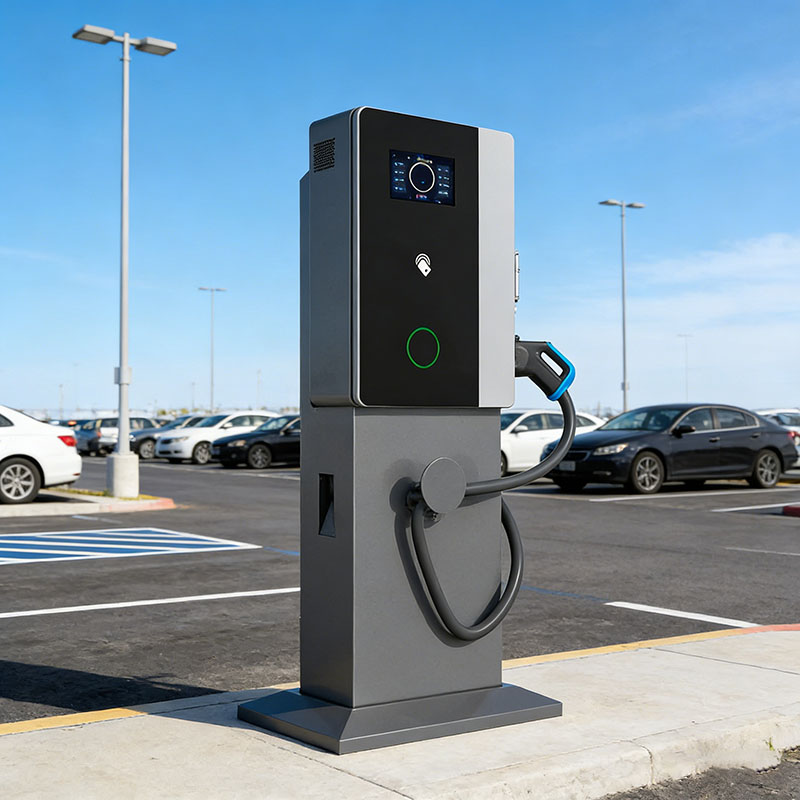
A1:A 7 kW Type 2 charger adds roughly 40–50 km of range per hour, so a 60–80 kWh battery typically needs six to ten hours from a low state of charge. That is why 7 kW units suit overnight parking rather than motorway stops.
A3:Outdoor installation is normal for commercial sites. Specify a unit suited to the local weather, mount it above standing water and provide a canopy or shelter where the site is fully exposed.
From a single 7 kW Type 2 wall unit to a multi-bay 80 kW EV charging station, 9Sunsolar helps developers, fleets and installers specify the right hardware and the structure around it. Tell us your parking layout, supply capacity and expected traffic, and we will recommend a charger mix, a mounting plan and a solar carport option that fits the site. Reliable charging hardware, clear documentation and support after delivery — that is what a charging project needs to stay online.
Signup our newsletter to get update information, promotion and insight.


 IPv6 network supported